What you're seeking is seeking you.
3419 results found with an empty search
- Human Family | Maya Angelou
The variety of our skin tones can confuse, bemuse, delight. Human Family by Maya Angelou I note the obvious differences in the human family. Some of us are serious, some thrive on comedy. Some declare their lives are lived as true profundity, and others claim they really live the real reality. The variety of our skin tones can confuse, bemuse, delight, brown and pink and beige and purple, tan and blue and white. I've sailed upon the seven seas and stopped in every land, I've seen the wonders of the world not yet one common man. I know ten thousand women called Jane and Mary Jane, but I've not seen any two who really were the same. Mirror twins are different although their features jibe, and lovers think quite different thoughts while lying side by side. We love and lose in China, we weep on England's moors, and laugh and moan in Guinea, and thrive on Spanish shores. We seek success in Finland, are born and die in Maine. In minor ways we differ, in major we're the same. I note the obvious differences between each sort and type, but we are more alike, my friends, than we are unalike. We are more alike, my friends, than we are unalike. We are more alike, my friends, than we are unalike. Liveology Yoga Studios creates uplifting content for your whole life. Join us on the journey of seeking God, self-study, healing, and awakening as we draw from spiritual traditions across the world. Subscribe for access to our exclusive library of articles and videos and other special benefits. Make sure to follow us on Instagram and YouTube! Thank you for your continued and growing support. Peace & Pineapples!
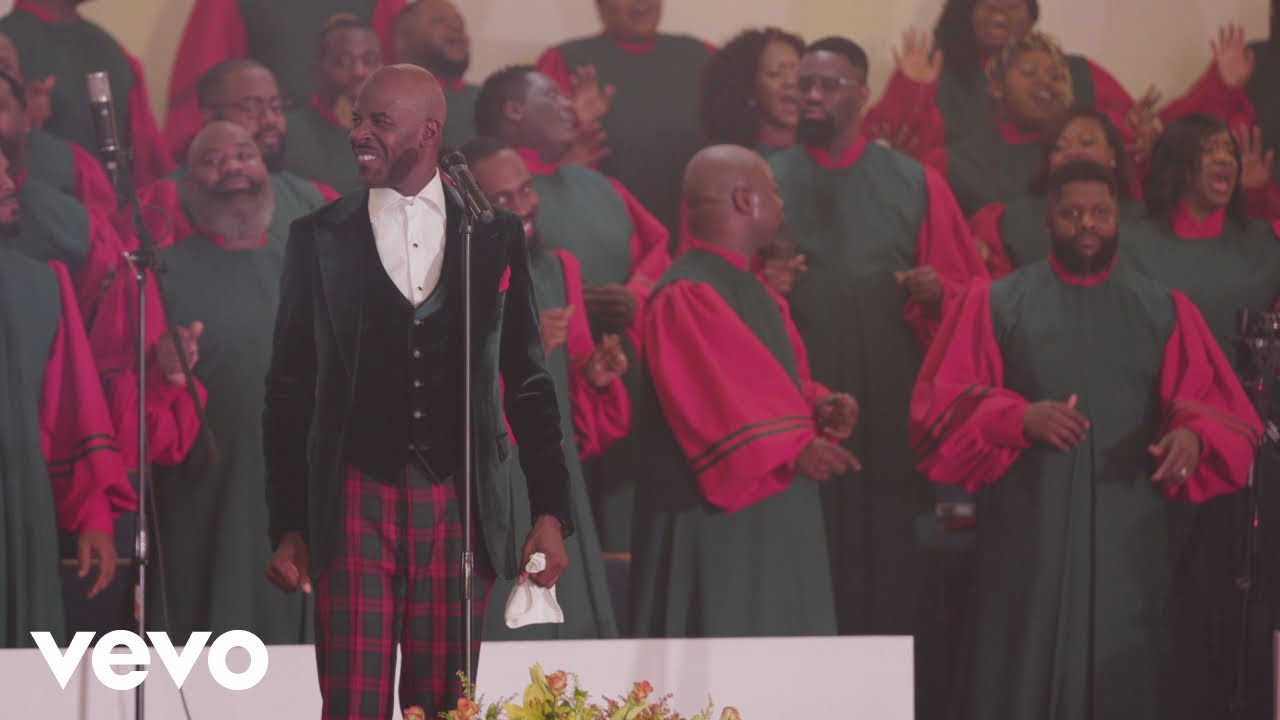
- Since He Came | Ricky Dillard
Since He came into my life, I'm not the same A wonderful change has come over me A wonderful change has come over me A wonderful change has come over me A wonderful change has come over me Things I used to do I don't do no more Aww, things I used to say I don't say no more Since He came into my life I'm not the same A wonderful change has come over me A wonderful change has come over me A wonderful change has come over me A wonderful change has come over me Things I used to do I don't do no more Awww, Things I used to say I don't say no more Since He came into my life, I'm not the same A great change, since He came into my life, I'm not the same A great change, since He came into my life, I'm not the same A great change... Since He came into my life Since He came into my life Since He came into my life Since He came into my life Soprano: I'm not the same Since He came into my life Since He came into my life Altos: Change, change, everything changed Since He came into my life Since He came into my life Tenors: He made a change Since He came into my life Since He came into my life Sopranos: I'm not the same Altos: Change, change, everything changed Tenors: He made a Change Since He came into my life Since He came into my life A Great Change, great change, great change Since he came into my life... A Great Change... Liveology® Yoga Studios & Magazine creates uplifting content and products and events, sharing "More life. More yoga." Please tell a friend about Liveology today. Thank you for your continued and growing support. Peace & Pineapples!
- Luke 16
Whoever is faithful in a very little is faithful also in much; and whoever is dishonest in a very little is dishonest also in much. The Books of the Bible The Parable of the Dishonest Manager 1 Then Jesus said to the disciples, “There was a rich man who had a manager, and charges were brought to him that this man was squandering his property. 2 So he summoned him and said to him, ‘What is this that I hear about you? Give me an accounting of your management, because you cannot be my manager any longer.’ 3 Then the manager said to himself, ‘What will I do, now that my master is taking the position away from me? I am not strong enough to dig, and I am ashamed to beg. 4 I have decided what to do so that, when I am dismissed as manager, people may welcome me into their homes.’ 5 So, summoning his master’s debtors one by one, he asked the first, ‘How much do you owe my master?’ 6 He answered, ‘A hundred jugs of olive oil.’ He said to him, ‘Take your bill, sit down quickly, and make it fifty.’ 7 Then he asked another, ‘And how much do you owe?’ He replied, ‘A hundred containers of wheat.’ He said to him, ‘Take your bill and make it eighty.’ 8 And his master commended the dishonest manager because he had acted shrewdly; for the children of this age are more shrewd in dealing with their own generation than are the children of light. 9 And I tell you, make friends for yourselves by means of dishonest wealth so that when it is gone, they may welcome you into the eternal homes. 10 “Whoever is faithful in a very little is faithful also in much; and whoever is dishonest in a very little is dishonest also in much. 11 If then you have not been faithful with the dishonest wealth, who will entrust to you the true riches? 12 And if you have not been faithful with what belongs to another, who will give you what is your own? 13 No slave can serve two masters; for a slave will either hate the one and love the other, or be devoted to the one and despise the other. You cannot serve God and wealth.” The Law and the Kingdom of God 14 The Pharisees, who were lovers of money, heard all this, and they ridiculed him. 15 So he said to them, “You are those who justify yourselves in the sight of others; but God knows your hearts; for what is prized by human beings is an abomination in the sight of God. 16 “The law and the prophets were in effect until John came; since then the good news of the kingdom of God is proclaimed, and everyone tries to enter it by force. 17 But it is easier for heaven and earth to pass away, than for one stroke of a letter in the law to be dropped. 18 “Anyone who divorces his wife and marries another commits adultery, and whoever marries a woman divorced from her husband commits adultery. The Rich Man and Lazarus 19 “There was a rich man who was dressed in purple and fine linen and who feasted sumptuously every day. 20 And at his gate lay a poor man named Lazarus, covered with sores, 21 who longed to satisfy his hunger with what fell from the rich man’s table; even the dogs would come and lick his sores. 22 The poor man died and was carried away by the angels to be with Abraham. The rich man also died and was buried. 23 In Hades, where he was being tormented, he looked up and saw Abraham far away with Lazarus by his side. 24 He called out, ‘Father Abraham, have mercy on me, and send Lazarus to dip the tip of his finger in water and cool my tongue; for I am in agony in these flames.’ 25 But Abraham said, ‘Child, remember that during your lifetime you received your good things, and Lazarus in like manner evil things; but now he is comforted here, and you are in agony. 26 Besides all this, between you and us a great chasm has been fixed, so that those who might want to pass from here to you cannot do so, and no one can cross from there to us.’ 27 He said, ‘Then, father, I beg you to send him to my father’s house— 28 for I have five brothers—that he may warn them, so that they will not also come into this place of torment.’ 29 Abraham replied, ‘They have Moses and the prophets; they should listen to them.’ 30 He said, ‘No, father Abraham; but if someone goes to them from the dead, they will repent.’ 31 He said to him, ‘If they do not listen to Moses and the prophets, neither will they be convinced even if someone rises from the dead.’” New Revised Standard Version Liveology Yoga Studios & Magazine creates uplifting content and products, sharing "More life. More yoga." Enjoy a wealth of articles, videos, and interactive content for self-study, drawing upon wisdom from across the world. Subscribe for exclusive content, including issues of the mag. Tell a friend about us today! Thank you for your continued and growing support. Peace & Pineapples!
- Appendix | Common Sense by Thomas Paine
Ceremony, and even silence, from whatever motives they may arise, have a hurtful tendency when they give the least degree of countenance to base and wicked performances. Since the publication of the first edition of this pamphlet, or rather, on the same day on which it came out, the King’s Speech made its appearance in this city [Philadelphia]. Had the spirit of prophecy directed the birth of this production, it could not have brought it forth at a more seasonable juncture, or at a more necessary time. The bloody-mindedness of the one, shows the necessity of pursuing the doctrine of the other. Men read by way of revenge. And the Speech, instead of terrifying, prepared a way for the manly principles of Independance. Ceremony, and even silence, from whatever motives they may arise, have a hurtful tendency when they give the least degree of countenance to base and wicked performances; wherefore, if this maxim be admitted, it naturally follows, that the King’s Speech, as being a piece of finished villany, deserved and still deserves, a general execration, both by the Congress and the people. Yet, as the domestic tranquillity of a nation, depends greatly on the chastity of what might properly be called NATIONAL MANNERS, it is often better to pass some things over in silent disdain, than to make use of such new methods of dislike, as might introduce the least innovation on that guardian of our peace and safety. And, perhaps, it is chiefly owing to this prudent delicacy, that the King’s Speech hath not before now suffered a public execution. The Speech, if it may be called one, is nothing better than a wilful audacious libel against the truth, the common good, and the existence of mankind; and is a formal and pompous method of offering up human sacrifices to the pride of tyrants. But this general massacre of mankind, is one of the privileges and the certain consequences of Kings; for as nature knows them not, they know not her, and although they are beings of our own creating, they know not us, and are become the Gods of their creators. The speech hath one good quality, which is, that it is not calculated to deceive, neither can we, even if we would, be deceived by it. Brutality and tyranny appear on the face of it. It leaves us at no loss: And every line convinces, even in the moment of reading, that he who hunts the woods for prey, the naked and untutored Indian, is less Savage than the King of Britain. Sir John Dalrymple, the putative father of a whining jesuitical piece, fallaciously called, “The address of the people of England to the inhabitants of America,” hath perhaps from a vain supposition that the people here were to be frightened at the pomp and description of a king, given (though very unwisely on his part) the real character of the present one: “But,” says this writer, “if you are inclined to pay compliments to an administration, which we do not complain of (meaning the Marquis of Rockingham’s at the repeal of the Stamp Act) it is very unfair in you to withhold them from that prince, by whose NOD ALONE they were permitted to do any thing.” This is toryism with a witness! Here is idolatry even without a mask: And he who can calmly hear and digest such doctrine, hath forfeited his claim to rationality—an apostate from the order of manhood—and ought to be considered as one who hath not only given up the proper dignity of man, but sunk himself beneath the rank of animals, and contemptibly crawls through the world like a worm. However, it matters very little now what the king of England either says or does; he hath wickedly broken through every moral and human obligation, trampled nature and conscience beneath his feet, and by a steady and constitutional spirit of insolence and cruelty procured for himself an universal hatred. It is now the interest of America to provide for herself. She hath already a large and young family, whom it is more her duty to take care of, than to be granting away her property to support a power who is become a reproach to the names of men and christians—YE, whose office it is to watch the morals of a nation, of whatsoever sect or denomination ye are of, as well as ye who are more immediately the guardians of the public liberty, if ye wish to preserve your native country uncontaminated by European corruption, ye must in secret wish a separation. But leaving the moral part to private reflection, I shall chiefly confine my further remarks to the following heads: First, That it is the interest of America to be separated from Britain. Secondly, Which is the easiest and most practicable plan, RECONCILIATION or INDEPENDENCE with some occasional remarks. In support of the first, I could, if I judged it proper, produce the opinion of some of the ablest and most experienced men on this continent: and whose sentiments on that head, are not yet publicly known. It is in reality a self-evident position: for no nation in a state of foreign dependance, limited in its commerce, and cramped and fettered in its legislative powers, can ever arrive at any material eminence. America doth not yet know what opulence is; and although the progress which she hath made stands unparalleled in the history of other nations, it is but childhood compared with what she would be capable of arriving at, had she, as she ought to have, the legislative powers in her own hands. England is at this time proudly coveting what would do her no good were she to accomplish it; and the continent hesitating on a matter which will be her final ruin if neglected. It is the commerce and not the conquest of America by which England is to be benefited, and that would in a great measure continue, were the countries as independant of each other as France and Spain; because in many articles neither can go to a better market. But it is the independance of this country of Britain, or any other, which is now the main and only object worthy of contention, and which, like all other truths discovered by necessity, will appear clear and stronger every day. First, Because it will come to that one time or other. Secondly, Because the longer it is delayed, the harder it will be to accomplish. I have frequently amused myself both in public and private companies, with silently remarking the specious errors of those who speak without reflecting. And among the many which I have heard, the following seems the most general, viz. that had this rupture happened forty or fifty years hence, instead of now, the continent would have been more able to have shaken off the dependance. To which I reply, that our military ability, at this time, arises from the experience gained in the last war, and which in forty or fifty years time, would be totally extinct. The continent would not, by that time, have a general, or even a military officer left; and we, or those who may succeed us, would be as ignorant of martial matters as the ancient Indians: and this single position, closely attended to, will unanswerably prove that the present time is preferable to all others. The argument turns thus: At the conclusion of the last war, we had experience, but wanted numbers; and forty or fifty years hence, we shall have numbers, without experience; wherefore, the proper point of time, must be some particular point between the two extremes, in which a sufficiency of the former remains, and a proper increase of the latter is obtained: And that point of time is the present time. The reader will pardon this digression, as it does not properly come under the head I first set out with, and to which I again return by the following position, viz.: Should affairs be patched up with Britain, and she to remain the governing and sovereign power of America, (which, as matters are now circumstanced, is giving up the point entirely) we shall deprive ourselves of the very means of sinking the debt we have, or may contract. The value of the back lands, which some of the provinces are clandestinely deprived of, by the unjust extension of the limits of Canada, valued only at five pounds sterling per hundred acres, amount to upwards of twenty-five millions, Pennsylvania currency; and the quit-rents, at one penny sterling per acre, to two millions yearly. It is by the sale of those lands that the debt may be sunk, without burthen to any, and the quit-rent reserved thereon will always lessen, and in time will wholly support, the yearly expense of government. It matters not how long the debt is in paying, so that the lands when sold be applied to the discharge of it, and for the execution of which the Congress for the time being will be the continental trustees. I proceed now to the second head, viz. Which is the easiest and most practicable plan, Reconciliation or Independence; with some occasional remarks. He who takes nature for his guide, is not easily beaten out of his argument, and on that ground, I answer generally—That independance being a single simple line, contained within ourselves; and reconciliation, a matter exceedingly perplexed and complicated, and in which a treacherous capricious court is to interfere, gives the answer without a doubt. The present state of America is truly alarming to every man who is capable of reflection. Without law, without government, without any other mode of power than what is founded on, and granted by, courtesy. Held together by an unexampled occurrence of sentiment, which is nevertheless subject to change, and which every secret enemy is endeavoring to dissolve. Our present condition is, Legislation without law; wisdom without a plan; a constitution without a name; and, what is strangely astonishing, perfect independance contending for dependance. The instance is without a precedent, the case never existed before, and who can tell what may be the event? The property of no man is secure in the present unbraced system of things. The mind of the multitude is left at random, and seeing no fixed object before them, they pursue such as fancy or opinion presents. Nothing is criminal; there is no such thing as treason; wherefore, every one thinks himself at liberty to act as he pleases. The Tories would not have dared to assemble offensively, had they known that their lives, by that act, were forfeited to the laws of the state. A line of distinction should be drawn between English soldiers taken in battle, and inhabitants of America taken in arms. The first are prisoners, but the latter traitors. The one forfeits his liberty, the other his head. Notwithstanding our wisdom, there is a visible feebleness in some of our proceedings which gives encouragement to dissentions. The Continental Belt is too loosely buckled: And if something is not done in time, it will be too late to do any thing, and we shall fall into a state, in which neither Reconciliation nor Independance will be practicable. The king and his worthless adherents are got at their old game of dividing the Continent, and there are not wanting among us Printers who will be busy in spreading specious falsehoods. The artful and hypocritical letter which appeared a few months ago in two of the New-York papers, and likewise in two others, is an evidence that there are men who want both judgment and honesty. It is easy getting into holes and corners, and talking of reconciliation: But do such men seriously consider how difficult the task is, and how dangerous it may prove, should the Continent divide thereon? Do they take within their view all the various orders of men whose situation and circumstances, as well as their own, are to be considered therein? Do they put themselves in the place of the sufferer whose all is already gone, and of the soldier, who hath quitted all for the defence of his country? If their ill-judged moderation be suited to their own private situations only, regardless of others, the event will convince them that “they are reckoning without their host.” Put us, say some, on the footing we were in the year 1763: To which I answer, the request is not now in the power of Britain to comply with, neither will she propose it; but if it were, and even should be granted, I ask, as a reasonable question, By what means is such a corrupt and faithless court to be kept to its engagements? Another parliament, nay, even the present, may hereafter repeal the obligation, on the pretence of its being violently obtained, or unwisely granted; and, in that case, Where is our redress? No going to law with nations; cannon are the barristers of crowns; and the sword, not of justice, but of war, decides the suit. To be on the footing of 1763, it is not sufficient, that the laws only be put in the same state, but, that our circumstances likewise be put in the same state; our burnt and destroyed towns repaired or built up, our private losses made good, our public debts (contracted for defence) discharged; otherwise we shall be millions worse than we were at that enviable period. Such a request, had it been complied with a year ago, would have won the heart and soul of the Continent, but now it is too late. “The Rubicon is passed.” Besides, the taking up arms, merely to enforce the repeal of a pecuniary law, seems as unwarrantable by the divine law, and as repugnant to human feelings, as the taking up arms to enforce obedience thereto. The object, on either side, doth not justify the means; for the lives of men are too valuable to be cast away on such trifles. It is the violence which is done and threatened to our persons; the destruction of our property by an armed force; the invasion of our country by fire and sword, which conscientiously qualifies the use of arms: and the instant in which such mode of defence became necessary, all subjection to Britain ought to have ceased; and the independance of America should have been considered as dating its era from, and published by, the first musket that was fired against her. This line is a line of consistency; neither drawn by caprice, nor extended by ambition; but produced by a chain of events, of which the colonies were not the authors. I shall conclude these remarks, with the following timely and well-intended hints. We ought to reflect, that there are three different ways by which an independancy may hereafter be effected; and that one of those three, will, one day or other, be the fate of America, viz. By the legal voice of the people in Congress; by a military power; or by a mob: It may not always happen that our soldiers are citizens, and the multitude a body of reasonable men; virtue, as I have already remarked, is not hereditary, neither is it perpetual. Should an independancy be brought about by the first of those means, we have every opportunity and every encouragement before us, to form the noblest, purest constitution on the face of the earth. We have it in our power to begin the world over again. A situation, similar to the present, hath not happened since the days of Noah until now. The birthday of a new world is at hand, and a race of men, perhaps as numerous as all Europe contains, are to receive their portion of freedom from the events of a few months. The reflection is awful, and in this point of view, how trifling, how ridiculous, do the little paltry cavilings of a few weak or interested men appear, when weighed against the business of a world. Should we neglect the present favorable and inviting period, and independance be hereafter effected by any other means, we must charge the consequence to ourselves, or to those rather whose narrow and prejudiced souls are habitually opposing the measure, without either inquiring or reflecting. There are reasons to be given in support of independance which men should rather privately think of, than be publicly told of. We ought not now to be debating whether we shall be independant or not, but anxious to accomplish it on a firm, secure, and honorable basis, and uneasy rather that it is not yet began upon. Every day convinces us of its necessity. Even the Tories (if such beings yet remain among us) should, of all men, be the most solicitous to promote it; for as the appointment of committees at first protected them from popular rage, so, a wise and well established form of government will be the only certain means of continuing it securely to them. Wherefore, if they have not virtue enough to be WHIGS, they ought to have prudence enough to wish for independance. In short, Independance is the only BOND that tye and keep us together. We shall then see our object, and our ears will be legally shut against the schemes of an intriguing, as well as cruel, enemy. We shall then, too, be on a proper footing to treat with Britain; for there is reason to conclude, that the pride of that court will be less hurt by treating with the American states for terms of peace, than with those, whom she denominates “rebellious subjects,” for terms of accommodation. It is our delaying in that, encourages her to hope for conquest, and our backwardness tends only to prolong the war. As we have, without any good effect therefrom, withheld our trade to obtain a redress of our grievances, let us now try the alternative, by independantly redressing them ourselves, and then offering to open the trade. The mercantile and reasonable part of England, will be still with us; because, peace, with trade, is preferable to war without it. And if this offer be not accepted, other courts may be applied to. On these grounds I rest the matter. And as no offer hath yet been made to refute the doctrine contained in the former editions of this pamphlet, it is a negative proof, that either the doctrine cannot be refuted, or, that the party in favor of it are too numerous to be opposed. WHEREFORE, instead of gazing at each other with suspicious or doubtful curiosity, let each of us hold out to his neighbor the hearty hand of friendship, and unite in drawing a line, which, like an act of oblivion, shall bury in forgetfulness every former dissention. Let the names of Whig and Tory be extinct; and let none other be heard among us, than those of a good citizen; an open and resolute friend; and a virtuous supporter of the RIGHTS of MANKIND, and of the FREE AND INDEPENDANT STATES OF AMERICA. Liveology Yoga Studios creates uplifting content and products, sharing "More life. More yoga." Join us on the journey of seeking God, self-study, healing, and awakening as we draw from wisdom across the world. Subscribe for exclusive interactive content, including issues of Liveology Yoga Magazine. Please tell a friend about Liveology today! Thank you for your continued and growing support. Peace & Pineapples!
- Amalek Attacks Israel and is Defeated | Exodus 18
And Moses built an altar and called it, The LORD is my banner. The Books of the Bible Amalek Attacks Israel and Is Defeated 8 Then Amalek came and fought with Israel at Rephidim. 9 Moses said to Joshua, “Choose some men for us and go out, fight with Amalek. Tomorrow I will stand on the top of the hill with the staff of God in my hand.” 10 So Joshua did as Moses told him, and fought with Amalek, while Moses, Aaron, and Hur went up to the top of the hill. 11 Whenever Moses held up his hand, Israel prevailed; and whenever he lowered his hand, Amalek prevailed. 12 But Moses’ hands grew weary; so they took a stone and put it under him, and he sat on it. Aaron and Hur held up his hands, one on one side, and the other on the other side; so his hands were steady until the sun set. 13 And Joshua defeated Amalek and his people with the sword. 14 Then the LORD said to Moses, “Write this as a reminder in a book and recite it in the hearing of Joshua: I will utterly blot out the remembrance of Amalek from under heaven.” 15 And Moses built an altar and called it, The LORD is my banner. 16 He said, “A hand upon the banner of the LORD! The LORD will have war with Amalek from generation to generation.” New Revised Standard Version Liveology Yoga Studios & Magazine creates uplifting content and products, sharing "More life. More yoga." Enjoy a wealth of articles, videos, and interactive content for self-study, drawing upon wisdom from across the world. Subscribe for exclusive content, including issues of the mag. Tell a friend about us today! Thank you for your continued and growing support. Peace & Pineapples!
- The Dog in the Manger | Aesop's Fables
He can't eat himself and yet he won't let those eat who can. A dog was lying in a manger on the hay which had been put there for the cattle, and when they came and tried to eat, he growled and snapped at them and wouldn't let them get at their food. "What a selfish beast" said one of them to his companions. "He can't eat himself and yet he won't let those eat who can." Liveology Yoga Studios creates uplifting content and products, sharing "More life. More yoga." Enjoy a wealth of articles and videos for self-study, drawing upon wisdom from across the world. Subscribe for exclusive interactive content, including issues of Liveology Yoga Magazine. Tell a friend about Liveology Yoga Studios today! Thank you for your continued and growing support. Peace & Pineapples!
- Events at Horeb Recalled | Deuteronomy 1
May the LORD, the God of your ancestors, increase you a thousand times more and bless you, as he has promised you! The Books of the Bible Events at Horeb Recalled Deuteronomy 1:1 These are the words that Moses spoke to all Israel beyond the Jordan—in the wilderness, on the plain opposite Suph, between Paran and Tophel, Laban, Hazeroth, and Di-zahab. 2 (By the way of Mount Seir it takes eleven days to reach Kadesh-barnea from Horeb.) 3 In the fortieth year, on the first day of the eleventh month, Moses spoke to the Israelites just as the LORD had commanded him to speak to them. 4 This was after he had defeated King Sihon of the Amorites, who reigned in Heshbon, and King Og of Bashan, who reigned in Ashtaroth anda in Edrei. 5 Beyond the Jordan in the land of Moab, Moses undertook to expound this law as follows: 6 The LORD our God spoke to us at Horeb, saying, “You have stayed long enough at this mountain. 7 Resume your journey, and go into the hill country of the Amorites as well as into the neighboring regions—the Arabah, the hill country, the Shephelah, the Negeb, and the seacoast—the land of the Canaanites and the Lebanon, as far as the great river, the river Euphrates. 8 See, I have set the land before you; go in and take possession of the land that I swore to your ancestors, to Abraham, to Isaac, and to Jacob, to give to them and to their descendants after them.” Appointment of Tribal Leaders 9 At that time I said to you, “I am unable by myself to bear you. 10 The LORD your God has multiplied you, so that today you are as numerous as the stars of heaven. 11 May the LORD, the God of your ancestors, increase you a thousand times more and bless you, as he has promised you! 12 But how can I bear the heavy burden of your disputes all by myself? 13 Choose for each of your tribes individuals who are wise, discerning, and reputable to be your leaders.” 14 You answered me, “The plan you have proposed is a good one.” 15 So I took the leaders of your tribes, wise and reputable individuals, and installed them as leaders over you, commanders of thousands, commanders of hundreds, commanders of fifties, commanders of tens, and officials, throughout your tribes. 16 I charged your judges at that time: “Give the members of your community a fair hearing, and judge rightly between one person and another, whether citizen or resident alien. 17 You must not be partial in judging: hear out the small and the great alike; you shall not be intimidated by anyone, for the judgment is God’s. Any case that is too hard for you, bring to me, and I will hear it.” 18 So I charged you at that time with all the things that you should do. Israel’s Refusal to Enter the Land 19 Then, just as the LORD our God had ordered us, we set out from Horeb and went through all that great and terrible wilderness that you saw, on the way to the hill country of the Amorites, until we reached Kadesh-barnea. 20 I said to you, “You have reached the hill country of the Amorites, which the LORD our God is giving us. 21 See, the LORD your God has given the land to you; go up, take possession, as the LORD, the God of your ancestors, has promised you; do not fear or be dismayed.” 22 All of you came to me and said, “Let us send men ahead of us to explore the land for us and bring back a report to us regarding the route by which we should go up and the cities we will come to.” 23 The plan seemed good to me, and I selected twelve of you, one from each tribe. 24 They set out and went up into the hill country, and when they reached the Valley of Eshcol they spied it out 25 and gathered some of the land’s produce, which they brought down to us. They brought back a report to us, and said, “It is a good land that the LORD our God is giving us.” 26 But you were unwilling to go up. You rebelled against the command of the LORD your God; 27 you grumbled in your tents and said, “It is because the LORD hates us that he has brought us out of the land of Egypt, to hand us over to the Amorites to destroy us. 28 Where are we headed? Our kindred have made our hearts melt by reporting, ‘The people are stronger and taller than we; the cities are large and fortified up to heaven! We actually saw there the offspring of the Anakim!’” 29 I said to you, “Have no dread or fear of them. 30 The LORD your God, who goes before you, is the one who will fight for you, just as he did for you in Egypt before your very eyes, 31 and in the wilderness, where you saw how the LORD your God carried you, just as one carries a child, all the way that you traveled until you reached this place. 32 But in spite of this, you have no trust in the LORD your God, 33 who goes before you on the way to seek out a place for you to camp, in fire by night, and in the cloud by day, to show you the route you should take.” The Penalty for Israel’s Rebellion 34 When the LORD heard your words, he was wrathful and swore: 35 “Not one of these—not one of this evil generation—shall see the good land that I swore to give to your ancestors, 36 except Caleb son of Jephunneh. He shall see it, and to him and to his descendants I will give the land on which he set foot, because of his complete fidelity to the LORD.” 37 Even with me the LORD was angry on your account, saying, “You also shall not enter there. 38 Joshua son of Nun, your assistant, shall enter there; encourage him, for he is the one who will secure Israel’s possession of it. 39 And as for your little ones, who you thought would become booty, your children, who today do not yet know right from wrong, they shall enter there; to them I will give it, and they shall take possession of it. 40 But as for you, journey back into the wilderness, in the direction of the Red Sea.” 41 You answered me, “We have sinned against the LORD! We are ready to go up and fight, just as the LORD our God commanded us.” So all of you strapped on your battle gear, and thought it easy to go up into the hill country. 42 The LORD said to me, “Say to them, ‘Do not go up and do not fight, for I am not in the midst of you; otherwise you will be defeated by your enemies.’” 43 Although I told you, you would not listen. You rebelled against the command of the LORD and presumptuously went up into the hill country. 44 The Amorites who lived in that hill country then came out against you and chased you as bees do. They beat you down in Seir as far as Hormah. 45 When you returned and wept before the LORD, the LORD would neither heed your voice nor pay you any attention. New Revised Standard Version Liveology Yoga Studios creates uplifting content for your whole life. Join us on the journey of seeking God, self-study, healing, and awakening as we draw from spiritual traditions across the world. Subscribe for access to our exclusive library of articles and videos and other special benefits. Make sure to follow us on Instagram and YouTube! Thank you for your continued and growing support. Peace & Pineapples!
- Luke 15
This fellow welcomes sinners and eats with them. The Books of the Bible The Parable of the Lost Sheep 1 Now all the tax collectors and sinners were coming near to listen to him. 2 And the Pharisees and the scribes were grumbling and saying, “This fellow welcomes sinners and eats with them.” 3 So he told them this parable: 4 “Which one of you, having a hundred sheep and losing one of them, does not leave the ninety-nine in the wilderness and go after the one that is lost until he finds it? 5 When he has found it, he lays it on his shoulders and rejoices. 6 And when he comes home, he calls together his friends and neighbors, saying to them, ‘Rejoice with me, for I have found my sheep that was lost.’ 7 Just so, I tell you, there will be more joy in heaven over one sinner who repents than over ninety-nine righteous persons who need no repentance. The Parable of the Lost Coin 8 “Or what woman having ten silver coins, if she loses one of them, does not light a lamp, sweep the house, and search carefully until she finds it? 9 When she has found it, she calls together her friends and neighbors, saying, ‘Rejoice with me, for I have found the coin that I had lost.’ 10 Just so, I tell you, there is joy in the presence of the angels of God over one sinner who repents.” The Parable of the Prodigal and His Brother 11 Then Jesus said, “There was a man who had two sons. 12 The younger of them said to his father, ‘Father, give me the share of the property that will belong to me.’ So he divided his property between them. 13 A few days later the younger son gathered all he had and traveled to a distant country, and there he squandered his property in dissolute living. 14 When he had spent everything, a severe famine took place throughout that country, and he began to be in need. 15 So he went and hired himself out to one of the citizens of that country, who sent him to his fields to feed the pigs. 16 He would gladly have filled himself with the pods that the pigs were eating; and no one gave him anything. 17 But when he came to himself he said, ‘How many of my father’s hired hands have bread enough and to spare, but here I am dying of hunger! 18 I will get up and go to my father, and I will say to him, “Father, I have sinned against heaven and before you; 19 I am no longer worthy to be called your son; treat me like one of your hired hands.” ’ 20 So he set off and went to his father. But while he was still far off, his father saw him and was filled with compassion; he ran and put his arms around him and kissed him. 21 Then the son said to him, ‘Father, I have sinned against heaven and before you; I am no longer worthy to be called your son.’ 22 But the father said to his slaves, ‘Quickly, bring out a robe—the best one—and put it on him; put a ring on his finger and sandals on his feet. 23 And get the fatted calf and kill it, and let us eat and celebrate; 24 for this son of mine was dead and is alive again; he was lost and is found!’ And they began to celebrate. 25 “Now his elder son was in the field; and when he came and approached the house, he heard music and dancing. 26 He called one of the slaves and asked what was going on. 27 He replied, ‘Your brother has come, and your father has killed the fatted calf, because he has got him back safe and sound.’ 28 Then he became angry and refused to go in. His father came out and began to plead with him. 29 But he answered his father, ‘Listen! For all these years I have been working like a slave for you, and I have never disobeyed your command; yet you have never given me even a young goat so that I might celebrate with my friends. 30 But when this son of yours came back, who has devoured your property with prostitutes, you killed the fatted calf for him!’ 31 Then the father said to him, ‘Son, you are always with me, and all that is mine is yours. 32 But we had to celebrate and rejoice, because this brother of yours was dead and has come to life; he was lost and has been found.’” New Revised Standard Version Liveology Yoga Studios creates uplifting content and products, sharing "More life. More yoga." Join us on the journey of seeking God, self-study, healing, and awakening as we draw from spiritual traditions across the world. Subscribe for exclusive content. Please tell a friend about Liveology today. Thank you for your continued and growing support. Peace & Pineapples!
- Of The Present Ability of America | Common Sense by Thomas Paine
And as a compensation for her debt, she has a large navy; America is without a debt, and without a navy; yet for the twentieth part of the English national debt, could have a navy as large again. I Have never met with a man, either in England or America, who hath not confessed his opinion, that a separation between the countries would take place one time or other: And there is no instance in which we have shown less judgment, than in endeavoring to describe, what we call, the ripeness or fitness of the Continent for independance. As all men allow the measure, and vary only in their opinion of the time, let us, in order to remove mistakes, take a general survey of things, and endeavor if possible to find out the very time. But I need not go far, the inquiry ceases at once, for the time hath found us. The general concurrence, the glorious union of all things, proves the fact. ‘Tis not in numbers but in unity that our great strength lies: yet our present numbers are sufficient to repel the force of all the world. The Continent hath at this time the largest body of armed and disciplined men of any power under Heaven: and is just arrived at that pitch of strength, in which no single colony is able to support itself, and the whole, when united, is able to do anything. Our land force is more than sufficient, and as to Naval affairs, we cannot be insensible that Britain would never suffer an American man of war to be built, while the Continent remained in her hands. Wherefore, we should be no forwarder an hundred years hence in that branch than we are now; but the truth is, we should be less so, because the timber of the Country is every day diminishing, and that which will remain at last, will be far off or difficult to procure. Were the Continent crowded with inhabitants, her sufferings under the present circumstances would be intolerable. The more seaport-towns we had, the more should we have both to defend and to lose. Our present numbers are so happily proportioned to our wants, that no man need be idle. The diminution of trade affords an army, and the necessities of an army create a new trade. Debts we have none: and whatever we may contract on this account will serve as a glorious memento of our virtue. Can we but leave posterity with a settled form of government, an independant constitution of its own, the purchase at any price will be cheap. But to expend millions for the sake of getting a few vile acts repealed, and routing the present ministry only, is unworthy the charge, and is using posterity with the utmost cruelty; because it is leaving them the great work to do, and a debt upon their backs from which they derive no advantage. Such a thought’s unworthy a man of honour, and is the true characteristic of a narrow heart and a pidling politician. The debt we may contract doth not deserve our regard if the work be but accomplished. No nation ought to be without a debt. A national debt is a national bond; and when it bears no interest, is in no case a grievance. Britain is oppressed with a debt of upwards of one hundred and forty millions sterling, for which she pays upwards of four millions interest. And as a compensation for her debt, she has a large navy; America is without a debt, and without a navy; yet for the twentieth part of the English national debt, could have a navy as large again. The navy of England is not worth at this time more than three millions and a half sterling. The first and second editions of this pamphlet were published without the following calculations, which are now given as a proof that the above estimation of the navy is a just one. The charge of building a ship of each rate, and furnishing her with masts, yards, sails, and rigging, together with a proportion of eight months boatswain’s and carpenter’s sea-stores, as calculated by Mr. Burchett, Secretary to the navy. For a ship of 100 guns, . . 35,553 l. 90 . . 29,886 80 . . 23,638 70 . . 17,785 60 . . 14,197 50 . . 10,606 40 . . 7,558 30 . . 5,846 20 . . 3,710 And hence it is easy to sum up the value, or cost, rather, of the whole British navy, which, in the year 1757, when it was at its greatest glory, consisted of the following ships and guns. No country on the globe is so happily situated, or so internally capable of raising a fleet as America. Tar, timber, iron, and cordage are her natural produce. We need go abroad for nothing. Whereas the Dutch, who make large profits by hiring out their ships of war to the Spaniards and Portugese, are obliged to import most of the materials they use. We ought to view the building a fleet as an article of commerce, it being the natural manufactory of this country. ‘Tis the best money we can lay out. A navy when finished is worth more than it cost: And is that nice point in national policy, in which commerce and protection are united. Let us build; if we want them not, we can sell; and by that means replace our paper currency with ready gold and silver. In point of manning a fleet, people in general run into great errors; it is not necessary that one fourth part should be sailors. The Terrible privateer, captain Death, stood the hottest engagement of any ship last war, yet had not twenty sailors on board, though her complement of men was upwards of two hundred. A few able and social sailors will soon instruct a sufficient number of active landsmen in the common work of a ship. Wherefore we never can be more capable of beginning on maritime matters than now, while our timber is standing, our fisheries blocked up, and our sailors and shipwrights out of employ. Men of war, of seventy and eighty guns, were built forty years ago in New England, and why not the same now? Ship building is America’s greatest pride, and in which she will, in time, excel the whole world. The great empires of the east are mostly inland, and consequently excluded from the possibility of rivalling her. Africa is in a state of barbarism; and no power in Europe, hath either such an extent of coast, or such an internal supply of materials. Where nature hath given the one, she hath withheld the other; to America only hath she been liberal to both. The vast empire of Russia is almost shut out from the sea; wherefore her boundless forests, her tar, iron, and cordage are only articles of commerce. In point of safety, ought we to be without a fleet? We are not the little people now, which we were sixty years ago; at that time we might have trusted our property in the streets, or fields rather, and slept securely without locks or bolts to our doors and windows. The case is now altered, and our methods of defence ought to improve with our encrease of property. A common pirate, twelve months ago, might have come up the Delaware, and laid the city of Philadelphia under contribution for what sum he pleased; and the same might have happened to other places. Nay, any daring fellow, in a brig of fourteen or sixteen guns, might have robbed the whole Continent, and carried off half a million of money. These are circumstances which demand our attention, and point out the necessity of naval protection. Some perhaps will say, that after we have made it up with Britain, she will protect us. Can they be so unwise as to mean, that she will keep a navy in our Harbours for that purpose? Common sense will tell us, that the power which hath endeavoured to subdue us, is of all others, the most improper to defend us. Conquest may be effected under the pretence of friendship; and ourselves, after a long and brave resistance, be at last cheated into slavery. And if her ships are not to be admitted into our harbours, I would ask, how is she to protect us? A navy three or four thousand miles off can be of little use, and on sudden emergencies, none at all. Wherefore if we must hereafter protect ourselves, why not do it for ourselves? Why do it for another? The English list of ships of war, is long and formidable, but not a tenth part of them are at any one time fit for service, numbers of them are not in being; yet their names are pompously continued in the list, if only a plank be left of the ship: and not a fifth part of such as are fit for service, can be spared on any one station at one time. The East and West Indies, Mediterranean, Africa, and other parts, over which Britain extends her claim, make large demands upon her navy. From a mixture of prejudice and inattention, we have contracted a false notion respecting the navy of England, and have talked as if we should have the whole of it to encounter at once, and, for that reason, supposed that we must have one as large; which not being instantly practicable, has been made use of by a set of disguised Tories to discourage our beginning thereon. Nothing can be further from truth than this; for if America had only a twentieth part of the naval force of Britain, she would be by far an over-match for her; because, as we neither have, nor claim any foreign dominion, our whole force would be employed on our own coast, where we should, in the long run, have two to one the advantage of those who had three or four thousand miles to sail over, before they could attack us, and the same distance to return in order to refit and recruit. And although Britain, by her fleet, hath a check over our trade to Europe, we have as large a one over her trade to the West Indies, which, by laying in the neighborhood of the Continent, lies entirely at its mercy. Some method might be fallen on to keep up a naval force in time of peace, if we should not judge it necessary to support a constant navy. If premiums were to be given to Merchants to build and employ in their service, ships mounted with twenty, thirty, forty, or fifty guns, (the premiums to be in proportion to the loss of bulk to the merchant,) fifty or sixty of those ships, with a few guardships on constant duty, would keep up a sufficient navy, and that without burdening ourselves with the evil so loudly complained of in England, of suffering their fleet in time of peace to lie rotting in the docks. To unite the sinews of commerce and defence is sound policy; for when our strength and our riches play into each other’s hand, we need fear no external enemy. In almost every article of defence we abound. Hemp flourishes even to rankness, so that we need not want cordage. Our iron is superior to that of other countries. Our small arms equal to any in the world. Cannon we can cast at pleasure. Saltpetre and gunpowder we are every day producing. Our knowledge is hourly improving. Resolution is our inherent character, and courage hath never yet forsaken us. Wherefore, what is it that we want? Why is it that we hesitate? From Britain we can expect nothing but ruin. If she is once admitted to the government of America again, this Continent will not be worth living in. Jealousies will be always arising; insurrections will be constantly happening; and who will go forth to quell them? Who will venture his life to reduce his own countrymen to a foreign obedience? The difference between Pennsylvania and Connecticut, respecting some unlocated lands, shows the insignificance of a British government, and fully proves that nothing but Continental authority can regulate Continental matters. Another reason why the present time is preferable to all others, is, that the fewer our numbers are, the more land there is yet unoccupied, which, instead of being lavished by the king on his worthless dependants, may be hereafter applied, not only to the discharge of the present debt, but to the constant support of government. No nation under Heaven hath such an advantage as this. The infant state of the Colonies, as it is called, so far from being against, is an argument in favour of independance. We are sufficiently numerous, and were we more so we might be less united. ‘Tis a matter worthy of observation, that the more a country is peopled, the smaller their armies are. In military numbers, the ancients far exceeded the moderns: and the reason is evident, for trade being the consequence of population, men became too much absorbed thereby to attend to any thing else. Commerce diminishes the spirit both of patriotism and military defence. And history sufficiently informs us, that the bravest achievements were always accomplished in the non-age of a nation. With the increase of commerce England hath lost its spirit. The city of London, notwithstanding its numbers, submits to continued insults with the patience of a coward. The more men have to lose, the less willing are they to venture. The rich are in general slaves to fear, and submit to courtly power with the trembling duplicity of a spaniel. Youth is the seed-time of good habits as well in nations as in individuals. It might be difficult, if not impossible, to form the Continent into one Government half a century hence. The vast variety of interests, occasioned by an increase of trade and population, would create confusion. Colony would be against Colony. Each being able would scorn each other’s assistance: and while the proud and foolish gloried in their little distinctions, the wise would lament that the union had not been formed before. Wherefore the present time is the true time for establishing it. The intimacy which is contracted in infancy, and the friendship which is formed in misfortune, are of all others the most lasting and unalterable. Our present union is marked with both these characters: we are young, and we have been distressed; but our concord hath withstood our troubles, and fixes a memorable Æra for posterity to glory in. The present time, likewise, is that peculiar time which never happens to a nation but once, viz. the time of forming itself into a government. Most nations have let slip the opportunity, and by that means have been compelled to receive laws from their conquerors, instead of making laws for themselves. First, they had a king, and then a form of government; whereas the articles or charter of government should be formed first, and men delegated to execute them afterwards: but from the errors of other nations let us learn wisdom, and lay hold of the present opportunity—to begin government at the right end. When William the Conqueror subdued England, he gave them law at the point of the sword; and, until we consent that the seat of government in America be legally and authoritatively occupied, we shall be in danger of having it filled by some fortunate ruffian, who may treat us in the same manner, and then, where will be our freedom? where our property? As to religion, I hold it to be the indispensable duty of government to protect all conscientious professors thereof, and I know of no other business which government hath to do therewith. Let a man throw aside that narrowness of soul, that selfishness of principle, which the niggards of all professions are so unwilling to part with, and he will be at once delivered of his fears on that head. Suspicion is the companion of mean souls, and the bane of all good society. For myself, I fully and conscientiously believe, that it is the will of the Almighty that there should be a diversity of religious opinions among us. It affords a larger field for our Christian kindness: were we all of one way of thinking, our religious dispositions would want matter for probation; and on this liberal principle I look on the various denominations among us, to be like children of the same family, differing only in what is called their Christian names. In page [97] I threw out a few thoughts on the propriety of a Continental Charter (for I only presume to offer hints, not plans) and in this place, I take the liberty of re-mentioning the subject, by observing, that a charter is to be understood as a bond of solemn obligation, which the whole enters into, to support the right of every separate part, whether of religion, professional freedom, or property. A firm bargain and a right reckoning make long friends. I have heretofore likewise mentioned the necessity of a large and equal representation; and there is no political matter which more deserves our attention. A small number of electors, or a small number of representatives, are equally dangerous. But if the number of the representatives be not only small, but unequal, the danger is encreased. As an instance of this, I mention the following; when the petition of the associators was before the House of Assembly of Pennsylvania, twenty-eight members only were present; all the Bucks county members, being eight, voted against it, and had seven of the Chester members done the same, this whole province had been governed by two counties only; and this danger it is always exposed to. The unwarrantable stretch likewise, which that house made in their last sitting, to gain an undue authority over the Delegates of that Province, ought to warn the people at large, how they trust power out of their own hands. A set of instructions for their Delegates were put together, which in point of sense and business would have dishonoured a school-boy, and after being approved by a few, a very few, without doors, were carried into the house, and there passed in behalf of the whole Colony; whereas, did the whole colony know with what ill will that house had entered on some necessary public measures, they would not hesitate a moment to think them unworthy of such a trust. Immediate necessity makes many things convenient, which if continued would grow into oppressions. Expedience and right are different things. When the calamities of America required a consultation, there was no method so ready, or at that time so proper, as to appoint persons from the several houses of Assembly for that purpose; and the wisdom with which they have proceeded hath preserved this Continent from ruin. But as it is more than probable that we shall never be without a CONGRESS, every well wisher to good order must own that the mode for choosing members of that body, deserves consideration. And I put it as a question to those who make a study of mankind, whether representation and election is not too great a power for one and the same body of men to possess? When we are planning for posterity, we ought to remember that virtue is not hereditary. It is from our enemies that we often gain excellent maxims, and are frequently surprised into reason by their mistakes. Mr. Cornwall (one of the Lords of the Treasury) treated the petition of the New York Assembly with contempt, because that house, he said, consisted but of twenty-six members, which trifling number, he argued, could not with decency be put for the whole. We thank him for his involuntary honesty.∗ TO CONCLUDE, however strange it may appear to some, or however unwilling they may be to think so, matters not, but many strong and striking reasons may be given to show, that nothing can settle our affairs so expeditiously as an open and determined declaration for independance. Some of which are, First—It is the custom of Nations, when any two are at war, for some other powers, not engaged in the quarrel, to step in as mediators, and bring about the preliminaries of a peace: But while America calls herself the subject of Great Britain, no power, however well disposed she may be, can offer her mediation. Wherefore, in our present state we may quarrel on for ever. Secondly—It is unreasonable to suppose, that France or Spain will give us any kind of assistance, if we mean only to make use of that assistance for the purpose of repairing the breach, and strengthening the connection between Britain and America; because, those powers would be sufferers by the consequences. Thirdly—While we profess ourselves the subjects of Britain, we must, in the eyes of foreign nations, be considered as Rebels. The precedent is somewhat dangerous to their peace, for men to be in arms under the name of subjects: we, on the spot, can solve the paradox; but to unite resistance and subjection, requires an idea much too refined for common understanding. Fourthly—Were a manifesto to be published, and despatched to foreign Courts, setting forth the miseries we have endured, and the peaceful methods which we have ineffectually used for redress; declaring at the same time, that not being able any longer to live happily or safely under the cruel disposition of the British Court, we had been driven to the necessity of breaking off all connections with her; at the same time, assuring all such Courts of our peaceable disposition towards them, and of our desire of entering into trade with them: such a memorial would produce more good effects to this Continent, than if a ship were freighted with petitions to Britain. Under our present denomination of British subjects, we can neither be received nor heard abroad: the custom of all Courts is against us, and will be so, until by an independance we take rank with other nations. These proceedings may at first seem strange and difficult, but like all other steps which we have already passed over, will in a little time become familiar and agreeable: and until an independance is declared, the Continent will feel itself like a man who continues putting off some unpleasant business from day to day, yet knows it must be done, hates to set about it, wishes it over, and is continually haunted with the thoughts of its necessity. Liveology Yoga Studios creates uplifting content and products, sharing "More life. More yoga." Join us on the journey of seeking God, self-study, healing, and awakening as we draw from wisdom across the world. Subscribe for exclusive interactive content, including issues of Liveology Yoga Magazine. Please tell a friend about Liveology today! Thank you for your continued and growing support. Peace & Pineapples!
- The Desert Years | Deuteronomy 2
We journeyed back into the wilderness, in the direction of the Red Sea. The Books of the Bible The Desert Years Deuteronomy 1:46 After you had stayed at Kadesh as many days as you did, Deuteronomy 2:1 We journeyed back into the wilderness, in the direction of the Red Sea, as the LORD had told me and skirted Mount Seir for many days. 2 Then the LORD said to me: 3 “You have been skirting this hill country long enough. Head north, 4 and charge the people as follows: You are about to pass through the territory of your kindred, the descendants of Esau, who live in Seir. They will be afraid of you, so, be very careful 5 not to engage in battle with them, for I will not give you even so much as a foot’s length of their land, since I have given Mount Seir to Esau as a possession. 6 You shall purchase food from them for money, so that you may eat; and you shall also buy water from them for money, so that you may drink. 7 Surely the LORD your God has blessed you in all your undertakings; he knows your going through this great wilderness. These forty years the LORD your God has been with you; you have lacked nothing.” 8 So we passed by our kin, the descendants of Esau who live in Seir, leaving behind the route of the Arabah, and leaving behind Elath and Ezion-geber. When we had headed out along the route of the wilderness of Moab, 9 the LORD said to me: “Do not harass Moab or engage them in battle, for I will not give you any of its land as a possession, since I have given Ar as a possession to the descendants of Lot.” 10 (The Emim—a large and numerous people, as tall as the Anakim—had formerly inhabited it. 11 Like the Anakim, they are usually reckoned as Rephaim, though the Moabites call them Emim. 12 Moreover, the Horim had formerly inhabited Seir, but the descendants of Esau dispossessed them, destroying them and settling in their place, as Israel has done in the land that the LORD gave them as a possession.) 13 “Now then, proceed to cross over the Wadi Zered.” So we crossed over the Wadi Zered. 14 And the length of time we had traveled from Kadesh-barnea until we crossed the Wadi Zered was thirty-eight years, until the entire generation of warriors had perished from the camp, as the LORD had sworn concerning them. 15 Indeed, the LORD’S own hand was against them, to root them out from the camp, until all had perished. 16 Just as soon as all the warriors had died off from among the people, 17 the LORD spoke to me, saying, 18 “Today you are going to cross the boundary of Moab at Ar. 19 When you approach the frontier of the Ammonites, do not harass them or engage them in battle, for I will not give the land of the Ammonites to you as a possession, because I have given it to the descendants of Lot.” 20 (It also is usually reckoned as a land of Rephaim. Rephaim formerly inhabited it, though the Ammonites call them Zamzummim, 21 a strong and numerous people, as tall as the Anakim. But the LORD destroyed them from before the Ammonites so that they could dispossess them and settle in their place. 22 He did the same for the descendants of Esau, who live in Seir, by destroying the Horim before them so that they could dispossess them and settle in their place even to this day. 23 As for the Avvim, who had lived in settlements in the vicinity of Gaza, the Caphtorim, who came from Caphtor, destroyed them and settled in their place.) 24 “Proceed on your journey and cross the Wadi Arnon. See, I have handed over to you King Sihon the Amorite of Heshbon, and his land. Begin to take possession by engaging him in battle. 25 This day I will begin to put the dread and fear of you upon the peoples everywhere under heaven; when they hear report of you, they will tremble and be in anguish because of you.” Defeat of King Sihon 26 So I sent messengers from the wilderness of Kedemoth to King Sihon of Heshbon with the following terms of peace: 27 “If you let me pass through your land, I will travel only along the road; I will turn aside neither to the right nor to the left. 28 You shall sell me food for money, so that I may eat, and supply me water for money, so that I may drink. Only allow me to pass through on foot— 29 just as the descendants of Esau who live in Seir have done for me and likewise the Moabites who live in Ar—until I cross the Jordan into the land that the LORD our God is giving us.” 30 But King Sihon of Heshbon was not willing to let us pass through, for the LORD your God had hardened his spirit and made his heart defiant in order to hand him over to you, as he has now done. 31 The LORD said to me, “See, I have begun to give Sihon and his land over to you. Begin now to take possession of his land.” 32 So when Sihon came out against us, he and all his people for battle at Jahaz, 33 the LORD our God gave him over to us; and we struck him down, along with his offspring and all his people. 34 At that time we captured all his towns, and in each town we utterly destroyed men, women, and children. We left not a single survivor. 35 Only the livestock we kept as spoil for ourselves, as well as the plunder of the towns that we had captured. 36 From Aroer on the edge of the Wadi Arnon (including the town that is in the wadi itself) as far as Gilead, there was no citadel too high for us. The LORD our God gave everything to us. 37 You did not encroach, however, on the land of the Ammonites, avoiding the whole upper region of the Wadi Jabbok as well as the towns of the hill country, just asa the LORD our God had charged. New Revised Standard Version Liveology Yoga Studios creates uplifting content for your whole life. Join us on the journey of seeking God, self-study, healing, and awakening as we draw from spiritual traditions across the world. Subscribe for access to our exclusive library of articles and videos and other special benefits. Make sure to follow us on Instagram and YouTube! Thank you for your continued and growing support. Peace & Pineapples!
- Water from the Rock | Exodus 17
But the people thirsted there for water; and the people complained against Moses. The Books of the Bible Water from the Rock 1 From the wilderness of Sin the whole congregation of the Israelites journeyed by stages, as the LORD commanded. They camped at Rephidim, but there was no water for the people to drink. 2 The people quarreled with Moses, and said, “Give us water to drink.” Moses said to them, “Why do you quarrel with me? Why do you test the LORD?” 3 But the people thirsted there for water; and the people complained against Moses and said, “Why did you bring us out of Egypt, to kill us and our children and livestock with thirst?” 4 So Moses cried out to the LORD, “What shall I do with this people? They are almost ready to stone me.” 5 The LORD said to Moses, “Go on ahead of the people, and take some of the elders of Israel with you; take in your hand the staff with which you struck the Nile, and go. 6 I will be standing there in front of you on the rock at Horeb. Strike the rock, and water will come out of it, so that the people may drink.” Moses did so, in the sight of the elders of Israel. 7 He called the place Massah and Meribah, because the Israelites quarreled and tested the LORD, saying, “Is the LORD among us or not?” New Revised Standard Version Liveology Yoga Studios & Magazine creates uplifting content and products, sharing "More life. More yoga." Enjoy a wealth of articles, videos, and interactive content for self-study, drawing upon wisdom from across the world. Subscribe for exclusive content, including issues of the mag. Tell a friend about us today! Thank you for your continued and growing support. Peace & Pineapples!
- John 14
But the Advocate, the Holy Spirit, whom the Father will send in my name, will teach you everything, and remind you of all that I have said to you. The Books of the Bible Jesus the Way to the Father John 14:1 “Do not let your hearts be troubled. Believe in God, believe also in me. 2 In my Father’s house there are many dwelling places. If it were not so, would I have told you that I go to prepare a place for you? 3 And if I go and prepare a place for you, I will come again and will take you to myself, so that where I am, there you may be also. 4 And you know the way to the place where I am going.” 5 Thomas said to him, “Lord, we do not know where you are going. How can we know the way?” 6 Jesus said to him, “I am the way, and the truth, and the life. No one comes to the Father except through me. 7 If you know me, you will know my Father also. From now on you do know him and have seen him.” 8 Philip said to him, “Lord, show us the Father, and we will be satisfied.” 9 Jesus said to him, “Have I been with you all this time, Philip, and you still do not know me? Whoever has seen me has seen the Father. How can you say, ‘Show us the Father’? 10 Do you not believe that I am in the Father and the Father is in me? The words that I say to you I do not speak on my own; but the Father who dwells in me does his works. 11 Believe me that I am in the Father and the Father is in me; but if you do not, then believe me because of the works themselves. 12 Very truly, I tell you, the one who believes in me will also do the works that I do and, in fact, will do greater works than these, because I am going to the Father. 13 I will do whatever you ask in my name, so that the Father may be glorified in the Son. 14 If in my name you ask me for anything, I will do it. The Promise of the Holy Spirit 15 “If you love me, you will keep my commandments. 16 And I will ask the Father, and he will give you another Advocate, to be with you forever. 17 This is the Spirit of truth, whom the world cannot receive, because it neither sees him nor knows him. You know him, because he abides with you, and he will be in you. 18 “I will not leave you orphaned; I am coming to you. 19 In a little while the world will no longer see me, but you will see me; because I live, you also will live. 20 On that day you will know that I am in my Father, and you in me, and I in you. 21 They who have my commandments and keep them are those who love me; and those who love me will be loved by my Father, and I will love them and reveal myself to them.” 22 Judas (not Iscariot) said to him, “Lord, how is it that you will reveal yourself to us, and not to the world?” 23 Jesus answered him, “Those who love me will keep my word, and my Father will love them, and we will come to them and make our home with them. 24 Whoever does not love me does not keep my words; and the word that you hear is not mine, but is from the Father who sent me. 25 “I have said these things to you while I am still with you. 26 But the Advocate, the Holy Spirit, whom the Father will send in my name, will teach you everything, and remind you of all that I have said to you. 27 Peace I leave with you; my peace I give to you. I do not give to you as the world gives. Do not let your hearts be troubled, and do not let them be afraid. 28 You heard me say to you, ‘I am going away, and I am coming to you.’ If you loved me, you would rejoice that I am going to the Father, because the Father is greater than I. 29 And now I have told you this before it occurs, so that when it does occur, you may believe. 30 I will no longer talk much with you, for the ruler of this world is coming. He has no power over me; 31 but I do as the Father has commanded me, so that the world may know that I love the Father. Rise, let us be on our way. New Revised Standard Version Liveology® Yoga Studios & Magazine creates uplifting content for evolving humans as we draw from wisdom across the world. Shop yogi swag and go down the rabbit hole for exclusive content. Please join our email list and tell a friend about us today. Thank you for your continued and growing support all over the world. Peace & Pineapples!
- Luke 14
But when you are invited, go and sit down at the lowest place, so that when your host comes, he may say to you, ‘Friend, move up higher.’ The Books of the Bible Jesus Heals the Man with Dropsy 1 On one occasion when Jesus was going to the house of a leader of the Pharisees to eat a meal on the sabbath, they were watching him closely. 2 Just then, in front of him, there was a man who had dropsy. 3 And Jesus asked the lawyers and Pharisees, “Is it lawful to cure people on the sabbath, or not?” 4 But they were silent. So Jesus took him and healed him, and sent him away. 5 Then he said to them, “If one of you has a child or an ox that has fallen into a well, will you not immediately pull it out on a sabbath day?” 6 And they could not reply to this. Humility and Hospitality 7 When he noticed how the guests chose the places of honor, he told them a parable. 8 “When you are invited by someone to a wedding banquet, do not sit down at the place of honor, in case someone more distinguished than you has been invited by your host; 9 and the host who invited both of you may come and say to you, ‘Give this person your place,’ and then in disgrace you would start to take the lowest place. 10 But when you are invited, go and sit down at the lowest place, so that when your host comes, he may say to you, ‘Friend, move up higher’; then you will be honored in the presence of all who sit at the table with you. 11 For all who exalt themselves will be humbled, and those who humble themselves will be exalted.” 12 He said also to the one who had invited him, “When you give a luncheon or a dinner, do not invite your friends or your brothers or your relatives or rich neighbors, in case they may invite you in return, and you would be repaid. 13 But when you give a banquet, invite the poor, the crippled, the lame, and the blind. 14 And you will be blessed, because they cannot repay you, for you will be repaid at the resurrection of the righteous.” The Parable of the Great Dinner 15 One of the dinner guests, on hearing this, said to him, “Blessed is anyone who will eat bread in the kingdom of God!” 16 Then Jesus said to him, “Someone gave a great dinner and invited many. 17 At the time for the dinner he sent his slave to say to those who had been invited, ‘Come; for everything is ready now.’ 18 But they all alike began to make excuses. The first said to him, ‘I have bought a piece of land, and I must go out and see it; please accept my regrets.’ 19 Another said, ‘I have bought five yoke of oxen, and I am going to try them out; please accept my regrets.’ 20 Another said, ‘I have just been married, and therefore I cannot come.’ 21 So the slave returned and reported this to his master. Then the owner of the house became angry and said to his slave, ‘Go out at once into the streets and lanes of the town and bring in the poor, the crippled, the blind, and the lame.’ 22 And the slave said, ‘Sir, what you ordered has been done, and there is still room.’ 23 Then the master said to the slave, ‘Go out into the roads and lanes, and compel people to come in, so that my house may be filled. 24 For I tell you, none of those who were invited will taste my dinner.’” The Cost of Discipleship 25 Now large crowds were traveling with him; and he turned and said to them, 26 “Whoever comes to me and does not hate father and mother, wife and children, brothers and sisters, yes, and even life itself, cannot be my disciple. 27 Whoever does not carry the cross and follow me cannot be my disciple. 28 For which of you, intending to build a tower, does not first sit down and estimate the cost, to see whether he has enough to complete it? 29 Otherwise, when he has laid a foundation and is not able to finish, all who see it will begin to ridicule him, 30 saying, ‘This fellow began to build and was not able to finish.’ 31 Or what king, going out to wage war against another king, will not sit down first and consider whether he is able with ten thousand to oppose the one who comes against him with twenty thousand? 32 If he cannot, then, while the other is still far away, he sends a delegation and asks for the terms of peace. 33 So therefore, none of you can become my disciple if you do not give up all your possessions. About Salt 34 “Salt is good; but if salt has lost its taste, how can its saltiness be restored? 35 It is fit neither for the soil nor for the manure pile; they throw it away. Let anyone with ears to hear listen!” New Revised Standard Version Liveology Yoga Studios & Magazine creates uplifting content and products, sharing "More life. More yoga." Enjoy a wealth of articles, videos, and interactive content for self-study, drawing upon wisdom from across the world. Subscribe for exclusive content, including issues of the mag. Tell a friend about us today! Thank you for your continued and growing support. Peace & Pineapples!
- Thoughts on the Present State of American Affairs | Common Sense by Thomas Paine
A government of our own is our natural right. In the following pages I offer nothing more than simple facts, plain arguments, and common sense: and have no other preliminaries to settle with the reader, than that he will divest himself of prejudice and prepossession, and suffer his reason and his feelings to determine for themselves: that he will put on, or rather that he will not put off, the true character of a man, and generously enlarge his views beyond the present day. Volumes have been written on the subject of the struggle between England and America. Men of all ranks have embarked in the controversy, from different motives, and with various designs; but all have been ineffectual, and the period of debate is closed. Arms as the last resource decide the contest; the appeal was the choice of the King, and the Continent has accepted the challenge. It hath been reported of the late Mr. Pelham (who tho’ an able minister was not without his faults) that on his being attacked in the House of Commons on the score that his measures were only of a temporary kind, replied, “they will last my time.” Should a thought so fatal and unmanly possess the Colonies in the present contest, the name of ancestors will be remembered by future generations with detestation. The Sun never shined on a cause of greater worth. ‘Tis not the affair of a City, a County, a Province, or a Kingdom; but of a Continent—of at least one eighth part of the habitable Globe. ‘Tis not the concern of a day, a year, or an age; posterity are virtually involved in the contest, and will be more or less affected even to the end of time, by the proceedings now. Now is the seed-time of Continental union, faith and honour. The least fracture now will be like a name engraved with the point of a pin on the tender rind of a young oak; the wound would enlarge with the tree, and posterity read it in full grown characters. By referring the matter from argument to arms, a new æra for politics is struck—a new method of thinking hath arisen. All plans, proposals, &c. prior to the nineteenth of April, i.e. to the commencement of hostilities,1 are like the almanacks of the last year; which tho’ proper then, are superceded and useless now. Whatever was advanced by the advocates on either side of the question then, terminated in one and the same point, viz. a union with Great Britain; the only difference between the parties was the method of effecting it; the one proposing force, the other friendship; but it hath so far happened that the first hath failed, and the second hath withdrawn her influence. As much hath been said of the advantages of reconciliation, which, like an agreeable dream, hath passed away and left us as we were, it is but right that we should examine the contrary side of the argument, and enquire into some of the many material injuries which these Colonies sustain, and always will sustain, by being connected with and dependant on Great-Britain. To examine that connection and dependance, on the principles of nature and common sense, to see what we have to trust to, if separated, and what we are to expect, if dependant. I have heard it asserted by some, that as America has flourished under her former connection with Great-Britain, the same connection is necessary towards her future happiness, and will always have the same effect. Nothing can be more fallacious than this kind of argument. We may as well assert that because a child has thrived upon milk, that it is never to have meat, or that the first twenty years of our lives is to become a precedent for the next twenty. But even this is admitting more than is true; for I answer roundly, that America would have flourished as much, and probably much more, had no European power taken any notice of her. The commerce by which she hath enriched herself are the necessaries of life, and will always have a market while eating is the custom of Europe. But she has protected us, say some. That she hath engrossed us is true, and defended the Continent at our expense as well as her own, is admitted; and she would have defended Turkey from the same motive, viz. for the sake of trade and dominion. Alas! we have been long led away by ancient prejudices and made large sacrifices to superstition. We have boasted the protection of Great Britain, without considering, that her motive was interest not attachment; and that she did not protect us from our enemies on our account; but from her enemies on her own account, from those who had no quarrel with us on any other account, and who will always be our enemies on the same account. Let Britain waive her pretensions to the Continent, or the Continent throw off the dependance, and we should be at peace with France and Spain, were they at war with Britain. The miseries of Hanover last war ought to warn us against connections. It hath lately been asserted in parliament, that the Colonies have no relation to each other but through the Parent Country, i.e. that Pennsylvania and the Jerseys, and so on for the rest, are sister Colonies by the way of England; this is certainly a very roundabout way of proving relationship, but it is the nearest and only true way of proving enmity (or enemyship, if I may so call it.) France and Spain never were, nor perhaps ever will be, our enemies as Americans, but as our being the subjects of Great Britain. But Britain is the parent country, say some. Then the more shame upon her conduct. Even brutes do not devour their young, nor savages make war upon their families; Wherefore, the assertion, if true, turns to her reproach; but it happens not to be true, or only partly so, and the phrase parent or mother country hath been jesuitically adopted by the King and his parasites, with a low papistical design of gaining an unfair bias on the credulous weakness of our minds. Europe, and not England, is the parent country of America. This new World hath been the asylum for the persecuted lovers of civil and religious liberty from every part of Europe. Hither have they fled, not from the tender embraces of the mother, but from the cruelty of the monster; and it is so far true of England, that the same tyranny which drove the first emigrants from home, pursues their descendants still. In this extensive quarter of the globe, we forget the narrow limits of three hundred and sixty miles (the extent of England) and carry our friendship on a larger scale; we claim brotherhood with every European Christian, and triumph in the generosity of the sentiment. It is pleasant to observe by what regular gradations we surmount the force of local prejudices, as we enlarge our acquaintance with the World. A man born in any town in England divided into parishes, will naturally associate most with his fellow parishioners (because their interests in many cases will be common) and distinguish him by the name of neighbour; if he meet him but a few miles from home, he drops the narrow idea of a street, and salutes him by the name of townsman; if he travel out of the county and meet him in any other, he forgets the minor divisions of street and town, and calls him countryman, i. e. countyman: but if in their foreign excursions they should associate in France, or any other part of Europe, their local remembrance would be enlarged into that of Englishmen. And by a just parity of reasoning, all Europeans meeting in America, or any other quarter of the globe, are countrymen; for England, Holland, Germany, or Sweden, when compared with the whole, stand in the same places on the larger scale, which the divisions of street, town, and county do on the smaller ones; Distinctions too limited for Continental minds. Not one third of the inhabitants, even of this province, [Pennsylvania], are of English descent. Wherefore, I reprobate the phrase of Parent or Mother Country applied to England only, as being false, selfish, narrow and ungenerous. But, admitting that we were all of English descent, what does it amount to? Nothing. Britain, being now an open enemy, extinguishes every other name and title: and to say that reconciliation is our duty, is truly farcical. The first king of England, of the present line (William the Conqueror) was a Frenchman, and half the peers of England are descendants from the same country; wherefore, by the same method of reasoning, England ought to be governed by France. Much hath been said of the united strength of Britain and the Colonies, that in conjunction they might bid defiance to the world: But this is mere presumption; the fate of war is uncertain, neither do the expressions mean any thing; for this continent would never suffer itself to be drained of inhabitants, to support the British arms in either Asia, Africa, or Europe. Besides, what have we to do with setting the world at defiance? Our plan is commerce, and that, well attended to, will secure us the peace and friendship of all Europe; because it is the interest of all Europe to have America a free port. Her trade will always be a protection, and her barrenness of gold and silver secure her from invaders. I challenge the warmest advocate for reconciliation to show a single advantage that this continent can reap by being connected with Great Britain. I repeat the challenge; not a single advantage is derived. Our corn will fetch its price in any market in Europe, and our imported goods must be paid for buy them where we will. But the injuries and disadvantages which we sustain by that connection, are without number; and our duty to mankind at large, as well as to ourselves, instruct us to renounce the alliance: because, any submission to, or dependance on, Great Britain, tends directly to involve this Continent in European wars and quarrels, and set us at variance with nations who would otherwise seek our friendship, and against whom we have neither anger nor complaint. As Europe is our market for trade, we ought to form no partial connection with any part of it. It is the true interest of America to steer clear of European contentions, which she never can do, while, by her dependance on Britain, she is made the make-weight in the scale of British politics. Europe is too thickly planted with Kingdoms to be long at peace, and whenever a war breaks out between England and any foreign power, the trade of America goes to ruin, because of her connection with Britain. The next war may not turn out like the last, and should it not, the advocates for reconciliation now will be wishing for separation then, because neutrality in that case would be a safer convoy than a man of war. Every thing that is right or reasonable pleads for separation. The blood of the slain, the weeping voice of nature cries, ‘TIS TIME TO PART. Even the distance at which the Almighty hath placed England and America is a strong and natural proof that the authority of the one over the other, was never the design of Heaven. The time likewise at which the Continent was discovered, adds weight to the argument, and the manner in which it was peopled, encreases the force of it. The Reformation was preceded by the discovery of America: As if the Almighty graciously meant to open a sanctuary to the persecuted in future years, when home should afford neither friendship nor safety. The authority of Great Britain over this continent, is a form of government, which sooner or later must have an end: And a serious mind can draw no true pleasure by looking forward, under the painful and positive conviction that what he calls “the present constitution” is merely temporary. As parents, we can have no joy, knowing that this government is not sufficiently lasting to ensure any thing which we may bequeath to posterity: And by a plain method of argument, as we are running the next generation into debt, we ought to do the work of it, otherwise we use them meanly and pitifully. In order to discover the line of our duty rightly, we should take our children in our hand, and fix our station a few years farther into life; that eminence will present a prospect which a few present fears and prejudices conceal from our sight. Though I would carefully avoid giving unnecessary offence, yet I am inclined to believe, that all those who espouse the doctrine of reconciliation, may be included within the following descriptions. Interested men, who are not to be trusted, weak men who cannot see, prejudiced men who will not see, and a certain set of moderate men who think better of the European world than it deserves; and this last class, by an ill-judged deliberation, will be the cause of more calamities to this Continent than all the other three. It is the good fortune of many to live distant from the scene of present sorrow; the evil is not sufficiently brought to their doors to make them feel the precariousness with which all American property is possessed. But let our imaginations transport us a few moments to Boston; that seat of wretchedness will teach us wisdom, and instruct us for ever to renounce a power in whom we can have no trust. The inhabitants of that unfortunate city who but a few months ago were in ease and affluence, have now no other alternative than to stay and starve, or turn out to beg. Endangered by the fire of their friends if they continue within the city, and plundered by the soldiery if they leave it, in their present situation they are prisoners without the hope of redemption, and in a general attack for their relief they would be exposed to the fury of both armies. Men of passive tempers look somewhat lightly over the offences of Great Britain, and, still hoping for the best, are apt to call out, Come, come, we shall be friends again for all this. But examine the passions and feelings of mankind: bring the doctrine of reconciliation to the touchstone of nature, and then tell me whether you can hereafter love, honour, and faithfully serve the power that hath carried fire and sword into your land? If you cannot do all these, then are you only deceiving yourselves, and by your delay bringing ruin upon posterity. Your future connection with Britain, whom you can neither love nor honour, will be forced and unnatural, and being formed only on the plan of present convenience, will in a little time fall into a relapse more wretched than the first. But if you say, you can still pass the violations over, then I ask, hath your house been burnt? Hath your property been destroyed before your face? Are your wife and children destitute of a bed to lie on, or bread to live on? Have you lost a parent or a child by their hands, and yourself the ruined and wretched survivor? If you have not, then are you not a judge of those who have. But if you have, and can still shake hands with the murderers, then are you unworthy the name of husband, father, friend, or lover, and whatever may be your rank or title in life, you have the heart of a coward, and the spirit of a sycophant. This is not inflaming or exaggerating matters, but trying them by those feelings and affections which nature justifies, and without which we should be incapable of discharging the social duties of life, or enjoying the felicities of it. I mean not to exhibit horror for the purpose of provoking revenge, but to awaken us from fatal and unmanly slumbers, that we may pursue determinately some fixed object. ‘Tis not in the power of Britain or of Europe to conquer America, if she doth not conquer herself by delay and timidity. The present winter is worth an age if rightly employed, but if lost or neglected the whole Continent will partake of the misfortune; and there is no punishment which that man doth not deserve, be he who, or what, or where he will, that may be the means of sacrificing a season so precious and useful. ‘Tis repugnant to reason, to the universal order of things, to all examples from former ages, to suppose that this Continent can long remain subject to any external power. The most sanguine in Britain doth not think so. The utmost stretch of human wisdom cannot, at this time, compass a plan, short of separation, which can promise the continent even a year’s security. Reconciliation is now a fallacious dream. Nature hath deserted the connection, and art cannot supply her place. For, as Milton wisely expresses, “never can true reconcilement grow where wounds of deadly hate have pierced so deep.” Every quiet method for peace hath been ineffectual. Our prayers have been rejected with disdain; and hath tended to convince us that nothing flatters vanity or confirms obstinacy in Kings more than repeated petitioning—and nothing hath contributed more than that very measure to make the Kings of Europe absolute. Witness Denmark and Sweden. Wherefore, since nothing but blows will do, for God’s sake let us come to a final separation, and not leave the next generation to be cutting throats under the violated unmeaning names of parent and child. To say they will never attempt it again is idle and visionary; we thought so at the repeal of the stamp act, yet a year or two undeceived us; as well may we suppose that nations which have been once defeated will never renew the quarrel. As to government matters, ‘tis not in the power of Britain to do this continent justice: the business of it will soon be too weighty and intricate to be managed with any tolerable degree of convenience, by a power so distant from us, and so very ignorant of us; for if they cannot conquer us, they cannot govern us. To be always running three or four thousand miles with a tale or a petition, waiting four or five months for an answer, which, when obtained, requires five or six more to explain it in, will in a few years be looked upon as folly and childishness. There was a time when it was proper, and there is a proper time for it to cease. Small islands not capable of protecting themselves are the proper objects for government1 to take under their care; but there is something absurd, in supposing a Continent to be perpetually governed by an island. In no instance hath nature made the satellite larger than its primary planet; and as England and America, with respect to each other, reverse the common order of nature, it is evident that they belong to different systems. England to Europe: America to itself. I am not induced by motives of pride, party, or resentment to espouse the doctrine of separation and independence; I am clearly, positively, and conscientiously persuaded that it is the true interest of this Continent to be so; that every thing short of that is mere patchwork, that it can afford no lasting felicity,—that it is leaving the sword to our children, and shrinking back at a time when a little more, a little further, would have rendered this Continent the glory of the earth. As Britain hath not manifested the least inclination towards a compromise, we may be assured that no terms can be obtained worthy the acceptance of the Continent, or any ways equal to the expence of blood and treasure we have been already put to. The object contended for, ought always to bear some just proportion to the expense. The removal of North, or the whole detestable junto, is a matter unworthy the millions we have expended. A temporary stoppage of trade was an inconvenience, which would have sufficiently ballanced the repeal of all the acts complained of, had such repeals been obtained; but if the whole Continent must take up arms, if every man must be a soldier, ‘tis scarcely worth our while to fight against a contemptible ministry only. Dearly, dearly do we pay for the repeal of the acts, if that is all we fight for; for, in a just estimation ‘tis as great a folly to pay a Bunker-hill price for law as for land. As I have always considered the independancy of this continent, as an event which sooner or later must arrive, so from the late rapid progress of the Continent to maturity, the event cannot be far off. Wherefore, on the breaking out of hostilities, it was not worth the while to have disputed a matter which time would have finally redressed, unless we meant to be in earnest: otherwise it is like wasting an estate on a suit at law, to regulate the trespasses of a tenant whose lease is just expiring. No man was a warmer wisher for a reconciliation than myself, before the fatal nineteenth of April, 1775, but the moment the event of that day was made known, I rejected the hardened, sullen-tempered Pharaoh of England for ever; and disdain the wretch, that with the pretended title of FATHER OF HIS PEOPLE can unfeelingly hear of their slaughter, and composedly sleep with their blood upon his soul. But admitting that matters were now made up, what would be the event? I answer, the ruin of the Continent. And that for several reasons. First. The powers of governing still remaining in the hands of the King, he will have a negative over the whole legislation of this Continent. And as he hath shown himself such an inveterate enemy to liberty, and discovered such a thirst for arbitrary power, is he, or is he not, a proper person to say to these colonies, You shall make no laws but what I please!? And is there any inhabitant of America so ignorant as not to know, that according to what is called the present constitution, this Continent can make no laws but what the king gives leave to; and is there any man so unwise as not to see, that (considering what has happened) he will suffer no law to be made here but such as suits his purpose? We may be as effectually enslaved by the want of laws in America, as by submitting to laws made for us in England. After matters are made up (as it is called) can there be any doubt, but the whole power of the crown will be exerted to keep this continent as low and humble as possible? Instead of going forward we shall go backward, or be perpetually quarrelling, or ridiculously petitioning. We are already greater than the King wishes us to be, and will he not hereafter endeavor to make us less? To bring the matter to one point, Is the power who is jealous of our prosperity, a proper power to govern us? Whoever says No, to this question, is an Independant for independency means no more than this, whether we shall make our own laws, or, whether the King, the greatest enemy this continent hath, or can have, shall tell us there shall be no laws but such as I like. But the King, you will say, has a negative in England; the people there can make no laws without his consent. In point of right and good order, it is something very ridiculous that a youth of twenty-one (which hath often happened) shall say to several millions of people older and wiser than himself, “I forbid this or that act of yours to be law.” But in this place I decline this sort of reply, though I will never cease to expose the absurdity of it, and only answer that England being the King’s residence, and America not so, makes quite another case. The King’s negative here is ten times more dangerous and fatal than it can be in England; for there he will scarcely refuse his consent to a bill for putting England into as strong a state of defense as possible, and in America he would never suffer such a bill to be passed. America is only a secondary object in the system of British politics. England consults the good of this country no further than it answers her own purpose. Wherefore, her own interest leads her to suppress the growth of ours in every case which doth not promote her advantage, or in the least interferes with it. A pretty state we should soon be in under such a second hand government, considering what has happened! Men do not change from enemies to friends by the alteration of a name: And in order to show that reconciliation now is a dangerous doctrine, I affirm, that it would be policy in the King at this time to repeal the acts, for the sake of reinstating himself in the government of the provinces; In order that HE MAY ACCOMPLISH BY CRAFT AND SUBTLETY, IN THE LONG RUN, WHAT HE CANNOT DO BY FORCE AND VIOLENCE IN THE SHORT ONE. Reconciliation and ruin are nearly related. Secondly. That as even the best terms which we can expect to obtain can amount to no more than a temporary expedient, or a kind of government by guardianship, which can last no longer than till the Colonies come of age, so the general face and state of things in the interim will be unsettled and unpromising. Emigrants of property will not choose to come to a country whose form of government hangs but by a thread, and who is every day tottering on the brink of commotion and disturbance; and numbers of the present inhabitants would lay hold of the interval to dispose of their effects, and quit the Continent. But the most powerful of all arguments is, that nothing but independance, i. e. a Continental form of government, can keep the peace of the Continent and preserve it inviolate from civil wars. I dread the event of a reconciliation with Britain now, as it is more than probable that it will be followed by a revolt some where or other, the consequences of which may be far more fatal than all the malice of Britain. Thousands are already ruined by British barbarity; (thousands more will probably suffer the same fate.) Those men have other feelings than us who have nothing suffered. All they now possess is liberty; what they before enjoyed is sacrificed to its service, and having nothing more to lose they disdain submission. Besides, the general temper of the Colonies, towards a British government will be like that of a youth who is nearly out of his time; they will care very little about her: And a government which cannot preserve the peace is no government at all, and in that case we pay our money for nothing; and pray what is it that Britain can do, whose power will be wholly on paper, should a civil tumult break out the very day after reconciliation? I have heard some men say, many of whom I believe spoke without thinking, that they dreaded an independance, fearing that it would produce civil wars: It is but seldom that our first thoughts are truly correct, and that is the case here; for there is ten times more to dread from a patched up connection than from independance. I make the sufferer’s case my own, and I protest, that were I driven from house and home, my property destroyed, and my circumstances ruined, that as a man, sensible of injuries, I could never relish the doctrine of reconciliation, or consider myself bound thereby. The Colonies have manifested such a spirit of good order and obedience to Continental government, as is sufficient to make every reasonable person easy and happy on that head. No man can assign the least pretence for his fears, on any other grounds, than such as are truly childish and ridiculous, viz., that one colony will be striving for superiority over another. Where there are no distinctions there can be no superiority; perfect equality affords no temptation. The Republics of Europe are all (and we may say always) in peace. Holland and Switzerland are without wars, foreign or domestic: Monarchical governments, it is true, are never long at rest: the crown itself is a temptation to enterprising ruffians at home; and that degree of pride and insolence ever attendant on regal authority, swells into a rupture with foreign powers in instances where a republican government, by being formed on more natural principles, would negociate the mistake. If there is any true cause of fear respecting independance, it is because no plan is yet laid down. Men do not see their way out. Wherefore, as an opening into that business I offer the following hints; at the same time modestly affirming, that I have no other opinion of them myself, than that they may be the means of giving rise to something better. Could the straggling thoughts of individuals be collected, they would frequently form materials for wise and able men to improve into useful matter. Let the assemblies be annual, with a president only. The representation more equal, their business wholly domestic, and subject to the authority of a Continental Congress. Let each Colony be divided into six, eight, or ten, convenient districts, each district to send a proper number of Delegates to Congress, so that each Colony send at least thirty. The whole number in Congress will be at least 390. Each congress to sit and to choose a President by the following method. When the Delegates are met, let a Colony be taken from the whole thirteen Colonies by lot, after which let the Congress choose (by ballot) a president from out of the Delegates of that Province. In the next Congress, let a Colony be taken by lot from twelve only, omitting that Colony from which the president was taken in the former Congress, and so proceeding on till the whole thirteen shall have had their proper rotation. And in order that nothing may pass into a law but what is satisfactorily just, not less than three fifths of the Congress to be called a majority. He that will promote discord, under a government so equally formed as this, would have joined Lucifer in his revolt. But as there is a peculiar delicacy from whom, or in what manner, this business must first arise, and as it seems most agreeable and consistent that it should come from some intermediate body between the governed and the governors, that is, between the Congress and the People, let a Continental Conference be held in the following manner, and for the following purpose, A Committee of twenty six members of congress, viz. Two for each Colony. Two Members from each House of Assembly, or Provincial Convention; and five Representatives of the people at large, to be chosen in the capital city or town of each Province, for, and in behalf of the whole Province, by as many qualified voters as shall think proper to attend from all parts of the Province for that purpose; or, if more convenient, the Representatives may be chosen in two or three of the most populous parts thereof. In this conference, thus assembled, will be united the two grand principles of business, knowledge and power. The Members of Congress, Assemblies, or Conventions, by having had experience in national concerns, will be able and useful counsellors, and the whole, being impowered by the people, will have a truly legal authority. The conferring members being met, let their business be to frame a Continental Charter, or Charter of the United Colonies; (answering to what is called the Magna Charta of England) fixing the number and manner of choosing Members of Congress, Members of Assembly, with their date of sitting; and drawing the line of business and jurisdiction between them: Always remembering, that our strength is Continental, not Provincial. Securing freedom and property to all men, and above all things, the free exercise of religion, according to the dictates of conscience; with such other matter as it is necessary for a charter to contain. Immediately after which, the said conference to dissolve, and the bodies which shall be chosen conformable to the said charter, to be the Legislators and Governors of this Continent for the time being: Whose peace and happiness, may GOD preserve. AMEN. Should any body of men be hereafter delegated for this or some similar purpose, I offer them the following extracts from that wise observer on Governments, Dragonetti. “The science,” says he, “of the Politician consists in fixing the true point of happiness and freedom. Those men would deserve the gratitude of ages, who should discover a mode of government that contained the greatest sum of individual happiness, with the least national expense.” (Dragonetti on “Virtues and Reward.”) But where, say some, is the King of America? I’ll tell you, friend, he reigns above, and doth not make havoc of mankind like the Royal Brute of Great Britain. Yet that we may not appear to be defective even in earthly honours, let a day be solemnly set apart for proclaiming the Charter; let it be brought forth placed on the Divine Law, the Word of God; let a crown be placed thereon, by which the world may know, that so far as we approve of monarchy, that in America the law is king. For as in absolute governments the King is law, so in free countries the law ought to be king; and there ought to be no other. But lest any ill use should afterwards arise, let the Crown at the conclusion of the ceremony be demolished, and scattered among the people whose right it is. A government of our own is our natural right: and when a man seriously reflects on the precariousness of human affairs, he will become convinced, that it is infinitely wiser and safer, to form a constitution of our own in a cool deliberate manner, while we have it in our power, than to trust such an interesting event to time and chance. If we omit it now, some Massanello∗ may hereafter arise, who, laying hold of popular disquietudes, may collect together the desperate and the discontented, and by assuming to themselves the powers of government, finally sweep away the liberties of the Continent like a deluge. Should the government of America return again into the hands of Britain, the tottering situation of things will be a temptation for some desperate adventurer to try his fortune; and in such a case, what relief can Britain give? Ere she could hear the news, the fatal business might be done; and ourselves suffering like the wretched Britons under the oppression of the Conqueror. Ye that oppose independance now, ye know not what ye do: ye are opening a door to eternal tyranny, by keeping vacant the seat of government. There are thousands and tens of thousands, who would think it glorious to expel from the Continent, that barbarous and hellish power, which hath stirred up the Indians and the Negroes to destroy us; the cruelty hath a double guilt, it is dealing brutally by us, and treacherously by them. To talk of friendship with those in whom our reason forbids us to have faith, and our affections wounded thro’ a thousand pores instruct us to detest, is madness and folly. Every day wears out the little remains of kindred between us and them; and can there be any reason to hope, that as the relationship expires, the affection will encrease, or that we shall agree better when we have ten times more and greater concerns to quarrel over than ever? Ye that tell us of harmony and reconciliation, can ye restore to us the time that is past? Can ye give to prostitution its former innocence? neither can ye reconcile Britain and America. The last cord now is broken, the people of England are presenting addresses against us. There are injuries which nature cannot forgive; she would cease to be nature if she did. As well can the lover forgive the ravisher of his mistress, as the Continent forgive the murders of Britain. The Almighty hath implanted in us these unextinguishable feelings for good and wise purposes. They are the Guardians of his Image in our hearts. They distinguish us from the herd of common animals. The social compact would dissolve, and justice be extirpated from the earth, or have only a casual existence were we callous to the touches of affection. The robber and the murderer would often escape unpunished, did not the injuries which our tempers sustain, provoke us into justice. O! ye that love mankind! Ye that dare oppose not only the tyranny but the tyrant, stand forth! Every spot of the old world is overrun with oppression. Freedom hath been hunted round the Globe. Asia and Africa have long expelled her. Europe regards her like a stranger, and England hath given her warning to depart. O! receive the fugitive, and prepare in time an asylum for mankind. Liveology Yoga Studios creates uplifting content and products, sharing "More life. More yoga." Join us on the journey of seeking God, self-study, healing, and awakening as we draw from wisdom across the world. Subscribe for exclusive interactive content, including issues of Liveology Yoga Magazine. Please tell a friend about Liveology today! Thank you for your continued and growing support. Peace & Pineapples!
- Kum Ba Yah
Kum ba yah my Lord simply means "Come by here my Lord" in the Gullah dialect. Verse 1 Kum ba yah, my Lord, kum ba yah! Kum ba yah, my Lord, kum ba yah! Kum ba yah, my Lord, kum ba yah! O Lord, kum ba yah! Verse 2 Someone’s crying, Lord, kum ba yah! Someone’s crying, Lord, kum ba yah! Someone’s crying, Lord, kum ba yah! O Lord, kum ba yah! Verse 3 Someone’s singing, Lord, kum ba yah! Someone’s singing, Lord, kum ba yah! Someone’s singing, Lord, kum ba yah! O Lord, kum ba yah! Verse 4 Someone’s praying, Lord, kum ba yah! Someone’s praying, Lord, kum ba yah! Someone’s praying, Lord, kum ba yah! O Lord, kum ba yah! Liveology Yoga Studios & Magazine creates uplifting content and products, sharing "More life. More yoga." Join us on the journey of seeking God, self-study, healing, and awakening as we draw from wisdom across the world. Subscribe for exclusive content. Please tell a friend about Liveology today. Thank you for your continued and growing support. Peace & Pineapples!
- The Bride’s Matchless Beauty | Song of Solomon 6
There are sixty queens and eighty concubines, and maidens without number. My dove, my perfect one, is the only one. The Bride’s Matchless Beauty 6:4 You are beautiful as Tirzah, my love, comely as Jerusalem, terrible as an army with banners. 5 Turn away your eyes from me, for they overwhelm me! Your hair is like a flock of goats, moving down the slopes of Gilead. 6 Your teeth are like a flock of ewes, that have come up from the washing; all of them bear twins, and not one among them is bereaved. 7 Your cheeks are like halves of a pomegranate behind your veil. 8 There are sixty queens and eighty concubines, and maidens without number. 9 My dove, my perfect one, is the only one, the darling of her mother, flawless to her that bore her. The maidens saw her and called her happy; the queens and concubines also, and they praised her. 10 “Who is this that looks forth like the dawn, fair as the moon, bright as the sun, terrible as an army with banners?” 11 I went down to the nut orchard, to look at the blossoms of the valley, to see whether the vines had budded, whether the pomegranates were in bloom. 12 Before I was aware, my fancy set me in a chariot beside my prince. 13 Return, return, O Shulammite! Return, return, that we may look upon you. Why should you look upon the Shulammite, as upon a dance before two armies? New Revised Standard Version Liveology Yoga Studios creates uplifting content for your whole life. Join us on the journey of seeking God, self-study, healing, and awakening as we draw from spiritual traditions across the world. Subscribe for access to our exclusive library of articles and videos and other special benefits. Make sure to follow us on Instagram and YouTube! Thank you for your continued and growing support. Peace & Pineapples!
- Bitter Water Made Sweet & Bread from Heaven | Exodus 16
I am going to rain bread from heaven for you. The Books of the Bible Bitter Water Made Sweet 15:22 Then Moses ordered Israel to set out from the Red Sea, and they went into the wilderness of Shur. They went three days in the wilderness and found no water. 23 When they came to Marah, they could not drink the water of Marah because it was bitter. That is why it was called Marah. 24 And the people complained against Moses, saying, “What shall we drink?” 25 He cried out to the LORD; and the LORD showed him a piece of wood; he threw it into the water, and the water became sweet. There the LORD made for them a statute and an ordinance and there he put them to the test. 26 He said, “If you will listen carefully to the voice of the LORD your God, and do what is right in his sight, and give heed to his commandments and keep all his statutes, I will not bring upon you any of the diseases that I brought upon the Egyptians; for I am the LORD who heals you.” 27 Then they came to Elim, where there were twelve springs of water and seventy palm trees; and they camped there by the water. Bread from Heaven 16:1 The whole congregation of the Israelites set out from Elim; and Israel came to the wilderness of Sin, which is between Elim and Sinai, on the fifteenth day of the second month after they had departed from the land of Egypt. 2 The whole congregation of the Israelites complained against Moses and Aaron in the wilderness. 3 The Israelites said to them, “If only we had died by the hand of the LORD in the land of Egypt, when we sat by the fleshpots and ate our fill of bread; for you have brought us out into this wilderness to kill this whole assembly with hunger.” 4 Then the LORD said to Moses, “I am going to rain bread from heaven for you, and each day the people shall go out and gather enough for that day. In that way I will test them, whether they will follow my instruction or not. 5 On the sixth day, when they prepare what they bring in, it will be twice as much as they gather on other days.” 6 So Moses and Aaron said to all the Israelites, “In the evening you shall know that it was the LORD who brought you out of the land of Egypt, 7 and in the morning you shall see the glory of the LORD, because he has heard your complaining against the LORD. For what are we, that you complain against us?” 8 And Moses said, “When the LORD gives you meat to eat in the evening and your fill of bread in the morning, because the LORD has heard the complaining that you utter against him—what are we? Your complaining is not against us but against the LORD.” 9 Then Moses said to Aaron, “Say to the whole congregation of the Israelites, ‘Draw near to the LORD, for he has heard your complaining.’” 10 And as Aaron spoke to the whole congregation of the Israelites, they looked toward the wilderness, and the glory of the LORD appeared in the cloud. 11 The LORD spoke to Moses and said, 12 “I have heard the complaining of the Israelites; say to them, ‘At twilight you shall eat meat, and in the morning you shall have your fill of bread; then you shall know that I am the LORD your God.’” 13 In the evening quails came up and covered the camp; and in the morning there was a layer of dew around the camp. 14 When the layer of dew lifted, there on the surface of the wilderness was a fine flaky substance, as fine as frost on the ground. 15 When the Israelites saw it, they said to one another, “What is it?” For they did not know what it was. Moses said to them, “It is the bread that the LORD has given you to eat. 16 This is what the LORD has commanded: ‘Gather as much of it as each of you needs, an omer to a person according to the number of persons, all providing for those in their own tents.’” 17 The Israelites did so, some gathering more, some less. 18 But when they measured it with an omer, those who gathered much had nothing over, and those who gathered little had no shortage; they gathered as much as each of them needed. 19 And Moses said to them, “Let no one leave any of it over until morning.” 20 But they did not listen to Moses; some left part of it until morning, and it bred worms and became foul. And Moses was angry with them. 21 Morning by morning they gathered it, as much as each needed; but when the sun grew hot, it melted. 22 On the sixth day they gathered twice as much food, two omers apiece. When all the leaders of the congregation came and told Moses, 23 he said to them, “This is what the LORD has commanded: ‘Tomorrow is a day of solemn rest, a holy sabbath to the LORD; bake what you want to bake and boil what you want to boil, and all that is left over put aside to be kept until morning.’” 24 So they put it aside until morning, as Moses commanded them; and it did not become foul, and there were no worms in it. 25 Moses said, “Eat it today, for today is a sabbath to the LORD; today you will not find it in the field. 26 Six days you shall gather it; but on the seventh day, which is a sabbath, there will be none.” 27 On the seventh day some of the people went out to gather, and they found none. 28 The LORD said to Moses, “How long will you refuse to keep my commandments and instructions? 29 See! The LORD has given you the sabbath, therefore on the sixth day he gives you food for two days; each of you stay where you are; do not leave your place on the seventh day.” 30 So the people rested on the seventh day. 31 The house of Israel called it manna; it was like coriander seed, white, and the taste of it was like wafers made with honey. 32 Moses said, “This is what the LORD has commanded: ‘Let an omer of it be kept throughout your generations, in order that they may see the food with which I fed you in the wilderness, when I brought you out of the land of Egypt.’” 33 And Moses said to Aaron, “Take a jar, and put an omer of manna in it, and place it before the LORD, to be kept throughout your generations.” 34 As the LORD commanded Moses, so Aaron placed it before the covenant,a for safekeeping. 35 The Israelites ate manna forty years, until they came to a habitable land; they ate manna, until they came to the border of the land of Canaan. 36 An omer is a tenth of an ephah. New Revised Standard Version LiLiveology Yoga Studios & Magazine creates uplifting content and products, sharing "More life. More yoga." Enjoy a wealth of articles, videos, and interactive content for self-study, drawing upon wisdom from across the world. Subscribe for exclusive content, including issues of the mag. Tell a friend about us today! Thank you for your continued and growing support. Peace & Pineapples!
- The Goose that Laid the Golden Eggs | Aesop's Fables
Much wants more and loses all. A man and his wife had the good fortune to possess a goose which laid a golden egg every day. Lucky though they were, the soon began to think they were not getting rich fast enough, and imagining the bird must be made of gold inside, they decided to kill it in order to secure the whole store of precious metal at once. But when they cut it open they found it was just like any other goose. Thus, they neither got rich all at once, as they had hoped, nor enjoyed any longer the daily addition to their wealth. Liveology Yoga Studios creates uplifting content and products, sharing "More life. More yoga." Enjoy a wealth of articles and videos for self-study, drawing upon wisdom from across the world. Subscribe for exclusive interactive content, including issues of Liveology Yoga Magazine. Tell a friend about Liveology Yoga Studios today! Thank you for your continued and growing support. Peace & Pineapples!
- John 13
Then he poured water into a basin and began to wash the disciples’ feet and to wipe them with the towel that was tied around him. The Books of the Bible Jesus Washes the Disciples’ Feet 1 Now before the festival of the Passover, Jesus knew that his hour had come to depart from this world and go to the Father. Having loved his own who were in the world, he loved them to the end. 2 The devil had already put it into the heart of Judas son of Simon Iscariot to betray him. And during supper 3 Jesus, knowing that the Father had given all things into his hands, and that he had come from God and was going to God, 4 got up from the table, took off his outer robe, and tied a towel around himself. 5 Then he poured water into a basin and began to wash the disciples’ feet and to wipe them with the towel that was tied around him. 6 He came to Simon Peter, who said to him, “Lord, are you going to wash my feet?” 7 Jesus answered, “You do not know now what I am doing, but later you will understand.” 8 Peter said to him, “You will never wash my feet.” Jesus answered, “Unless I wash you, you have no share with me.” 9 Simon Peter said to him, “Lord, not my feet only but also my hands and my head!” 10 Jesus said to him, “One who has bathed does not need to wash, except for the feet, but is entirely clean. And you are clean, though not all of you.” 11 For he knew who was to betray him; for this reason he said, “Not all of you are clean.” 12 After he had washed their feet, had put on his robe, and had returned to the table, he said to them, “Do you know what I have done to you? 13 You call me Teacher and Lord—and you are right, for that is what I am. 14 So if I, your Lord and Teacher, have washed your feet, you also ought to wash one another’s feet. 15 For I have set you an example, that you also should do as I have done to you. 16 Very truly, I tell you, servants are not greater than their master, nor are messengers greater than the one who sent them. 17 If you know these things, you are blessed if you do them. 18 I am not speaking of all of you; I know whom I have chosen. But it is to fulfill the scripture, ‘The one who ate my bread has lifted his heel against me.’ 19 I tell you this now, before it occurs, so that when it does occur, you may believe that I am he. 20 Very truly, I tell you, whoever receives one whom I send receives me; and whoever receives me receives him who sent me.” Jesus Foretells His Betrayal 21 After saying this Jesus was troubled in spirit, and declared, “Very truly, I tell you, one of you will betray me.” 22 The disciples looked at one another, uncertain of whom he was speaking. 23 One of his disciples—the one whom Jesus loved—was reclining next to him; 24 Simon Peter therefore motioned to him to ask Jesus of whom he was speaking. 25 So while reclining next to Jesus, he asked him, “Lord, who is it?” 26 Jesus answered, “It is the one to whom I give this piece of bread when I have dipped it in the dish.” So when he had dipped the piece of bread, he gave it to Judas son of Simon Iscariot. 27 After he received the piece of bread, Satan entered into him. Jesus said to him, “Do quickly what you are going to do.” 28 Now no one at the table knew why he said this to him. 29 Some thought that, because Judas had the common purse, Jesus was telling him, “Buy what we need for the festival”; or, that he should give something to the poor. 30 So, after receiving the piece of bread, he immediately went out. And it was night. The New Commandment 31 When he had gone out, Jesus said, “Now the Son of Man has been glorified, and God has been glorified in him. 32 If God has been glorified in him, God will also glorify him in himself and will glorify him at once. 33 Little children, I am with you only a little longer. You will look for me; and as I said to the Jews so now I say to you, ‘Where I am going, you cannot come.’ 34 I give you a new commandment, that you love one another. Just as I have loved you, you also should love one another. 35 By this everyone will know that you are my disciples, if you have love for one another.” Jesus Foretells Peter’s Denial 36 Simon Peter said to him, “Lord, where are you going?” Jesus answered, “Where I am going, you cannot follow me now; but you will follow afterward.” 37 Peter said to him, “Lord, why can I not follow you now? I will lay down my life for you.” 38 Jesus answered, “Will you lay down your life for me? Very truly, I tell you, before the cock crows, you will have denied me three times. New Revised Standard Version Liveology Yoga Studios & Magazine creates uplifting content and products, sharing "More life. More yoga." Enjoy a wealth of articles, videos, and interactive content for self-study, drawing upon wisdom from across the world. Subscribe for exclusive content, including issues of the mag. Tell a friend about us today! Thank you for your continued and growing support. Peace & Pineapples!
- Of Monarchy & Heredity Succession | Common Sense by Thomas Paine
As the exalting one man so greatly above the rest cannot be justified on the equal rights of nature. Mankind being originally equals in the order of creation, the equality could only be destroyed by some subsequent circumstance: the distinctions of rich and poor may in a great measure be accounted for, and that without having recourse to the harsh ill-sounding names of oppression and avarice. Oppression is often the consequence, but seldom or never the means of riches; and tho’ avarice will preserve a man from being necessitously poor, it generally makes him too timorous to be wealthy. But there is another and greater distinction for which no truly natural or religious reason can be assigned, and that is the distinction of men into KINGS and SUBJECTS. Male and female are the distinctions of nature, good and bad the distinctions of Heaven; but how a race of men came into the world so exalted above the rest, and distinguished like some new species, is worth inquiring into, and whether they are the means of happiness or of misery to mankind. In the early ages of the world, according to the scripture chronology there were no kings; the consequence of which was, there were no wars; it is the pride of kings which throws mankind into confusion. Holland, without a king hath enjoyed more peace for this last century than any of the monarchical governments in Europe. Antiquity favours the same remark; for the quiet and rural lives of the first Patriarchs have a happy something in them, which vanishes when we come to the history of Jewish royalty. Government by kings was first introduced into the world by the Heathens, from whom the children of Israel copied the custom. It was the most prosperous invention the Devil ever set on foot for the promotion of idolatry. The Heathens paid divine honours to their deceased kings, and the Christian World hath improved on the plan by doing the same to their living ones. How impious is the title of sacred Majesty applied to a worm, who in the midst of his splendor is crumbling into dust! As the exalting one man so greatly above the rest cannot be justified on the equal rights of nature, so neither can it be defended on the authority of scripture; for the will of the Almighty as declared by Gideon, and the prophet Samuel, expressly disapproves of government by Kings. All anti-monarchical parts of scripture, have been very smoothly glossed over in monarchical governments, but they undoubtedly merit the attention of countries which have their governments yet to form. Render unto Cesar the things which are Cesar’s, is the scripture doctrine of courts, yet it is no support of monarchical government, for the Jews at that time were without a king, and in a state of vassalage to the Romans. Near three thousand years passed away, from the Mosaic account of the creation, till the Jews under a national delusion requested a king. Till then their form of government (except in extraordinary cases where the Almighty interposed) was a kind of Republic, administered by a judge and the elders of the tribes. Kings they had none, and it was held sinful to acknowledge any being under that title but the Lord of Hosts. And when a man seriously reflects on the idolatrous homage which is paid to the persons of kings, he need not wonder that the Almighty, ever jealous of his honour, should disapprove a form of government which so impiously invades the prerogative of Heaven. Monarchy is ranked in scripture as one of the sins of the Jews, for which a curse in reserve is denounced against them. The history of that transaction is worth attending to. The children of Israel being oppressed by the Midianites, Gideon marched against them with a small army, and victory thro’ the divine interposition decided in his favour. The Jews, elate with success, and attributing it to the generalship of Gideon, proposed making him a king, saying, Rule thou over us, thou and thy son, and thy son’s son. Here was temptation in its fullest extent; not a kingdom only, but an hereditary one; but Gideon in the piety of his soul replied, I will not rule over you, neither shall my son rule over you. THE LORD SHALL RULE OVER YOU. Words need not be more explicit; Gideon doth not decline the honour, but denieth their right to give it; neither doth he compliment them with invented declarations of his thanks, but in the positive stile of a prophet charges them with disaffection to their proper Sovereign, the King of Heaven. About one hundred and thirty years after this, they fell again into the same error. The hankering which the Jews had for the idolatrous customs of the Heathens, is something exceedingly unaccountable; but so it was, that laying hold of the misconduct of Samuel’s two sons, who were intrusted with some secular concerns, they came in an abrupt and clamorous manner to Samuel, saying, Behold thou art old, and thy sons walk not in thy ways, now make us a king to judge us like all the other nations. And here we cannot but observe that their motives were bad, viz. that they might be like unto other nations, i. e. the Heathens, whereas their true glory lay in being as much unlike them as possible. But the thing displeased Samuel when they said, give us a King to judge us; and Samuel prayed unto the Lord, and the Lord said unto Samuel, hearken unto the voice of the people in all that they say unto thee, for they have not rejected thee, but they have rejected me, THAT I SHOULD NOT REIGN OVER THEM. According to all the works which they have done since the day that I brought them up out of Egypt even unto this day, wherewith they have forsaken me, and served other Gods: so do they also unto thee. Now therefore hearken unto their voice, howbeit, protest solemnly unto them and show them the manner of the King that shall reign over them, i. e. not of any particular King, but the general manner of the Kings of the earth whom Israel was so eagerly copying after. And notwithstanding the great distance of time and difference of manners, the character is still in fashion. And Samuel told all the words of the Lord unto the people, that asked of him a King. And he said, This shall be the manner of the King that shall reign over you. He will take your sons and appoint them for himself for his chariots and to be his horsemen, and some shall run before his chariots (this description agrees with the present mode of impressing men) and he will appoint him captains over thousands and captains over fifties, will set them to ear his ground and to reap his harvest, and to make his instruments of war, and instruments of his chariots. And he will take your daughters to be confectionaries, and to be cooks, and to be bakers (this describes the expense and luxury as well as the oppression of Kings) and he will take your fields and your vineyards, and your olive yards, even the best of them, and give them to his servants. And he will take the tenth of your seed, and of your vineyards, and give them to his officers and to his servants (by which we see that bribery, corruption, and favouritism, are the standing vices of Kings) and he will take the tenth of your men servants, and your maid servants, and your goodliest young men, and your asses, and put them to his work: and he will take the tenth of your sheep, and ye shall be his servants, and ye shall cry out in that day because of your king which ye shall have chosen, AND THE LORD WILL NOT HEAR YOU IN THAT DAY. This accounts for the continuation of Monarchy; neither do the characters of the few good kings which have lived since, either sanctify the title, or blot out the sinfulness of the origin; the high encomium given of David takes no notice of him officially as a King, but only as a Man after God’s own heart. Nevertheless the people refused to obey the voice of Samuel, and they said, Nay but we will have a king over us, that we may be like all the nations, and that our king may judge us, and go out before us and fight our battles. Samuel continued to reason with them but to no purpose; he set before them their ingratitude, but all would not avail; and seeing them fully bent on their folly, he cried out, I will call unto the Lord, and he shall send thunder and rain (which was then a punishment, being in the time of wheat harvest) that ye may perceive and see that your wickedness is great which ye have done in the sight of the Lord, IN ASKING YOU A KING. So Samuel called unto the Lord, and the Lord sent thunder and rain that day, and all the people greatly feared the Lord and Samuel. And all the people said unto Samuel, Pray for thy servants unto the Lord thy God that we die not, for WE HAVE ADDED UNTO OUR SINS THIS EVIL, TO ASK A KING. These portions of scripture are direct and positive. They admit of no equivocal construction. That the Almighty hath here entered his protest against monarchical government is true, or the scripture is false. And a man hath good reason to believe that there is as much of kingcraft as priestcraft in withholding the scripture from the public in popish countries. For monarchy in every instance is the popery of government. To the evil of monarchy we have added that of hereditary succession; and as the first is a degradation and lessening of ourselves, so the second, claimed as a matter of right, is an insult and imposition on posterity. For all men being originally equals, no one by birth could have a right to set up his own family in perpetual preference to all others for ever, and tho’ himself might deserve some decent degree of honours of his cotemporaries, yet his descendants might be far too unworthy to inherit them. One of the strongest natural proofs of the folly of hereditary right in Kings, is that nature disapproves it, otherwise she would not so frequently turn it into ridicule, by giving mankind an Ass for a Lion. Secondly, as no man at first could possess any other public honors than were bestowed upon him, so the givers of those honors could have no power to give away the right of posterity, and though they might say “We choose you for our head,” they could not without manifest injustice to their children say “that your children and your children’s children shall reign over ours forever.” Because such an unwise, unjust, unnatural compact might (perhaps) in the next succession put them under the government of a rogue or a fool. Most wise men in their private sentiments have ever treated hereditary right with contempt; yet it is one of those evils which when once established is not easily removed: many submit from fear, others from superstition, and the more powerful part shares with the king the plunder of the rest. This is supposing the present race of kings in the world to have had an honorable origin: whereas it is more than probable, that, could we take off the dark covering of antiquity and trace them to their first rise, we should find the first of them nothing better than the principal ruffian of some restless gang, whose savage manners or pre-eminence in subtilty obtained him the title of chief among plunderers: and who by increasing in power and extending his depredations, overawed the quiet and defenceless to purchase their safety by frequent contributions. Yet his electors could have no idea of giving hereditary right to his descendants, because such a perpetual exclusion of themselves was incompatible with the free and unrestrained principles they professed to live by. Wherefore, hereditary succession in the early ages of monarchy could not take place as a matter of claim, but as something casual or complemental; but as few or no records were extant in those days, and traditionary history stuff’d with fables, it was very easy, after the lapse of a few generations, to trump up some superstitious tale conveniently timed, Mahomet-like, to cram hereditary right down the throats of the vulgar. Perhaps the disorders which threatened, or seemed to threaten, on the decease of a leader and the choice of a new one (for elections among ruffians could not be very orderly) induced many at first to favour hereditary pretensions; by which means it happened, as it hath happened since, that what at first was submitted to as a convenience was afterwards claimed as a right. England since the conquest hath known some few good monarchs, but groaned beneath a much larger number of bad ones: yet no man in his senses can say that their claim under William the Conqueror is a very honourable one. A French bastard landing with an armed Banditti and establishing himself king of England against the consent of the natives, is in plain terms a very paltry rascally original. It certainly hath no divinity in it. However it is needless to spend much time in exposing the folly of hereditary right; if there are any so weak as to believe it, let them promiscuously worship the Ass and the Lion, and welcome. I shall neither copy their humility, nor disturb their devotion. Yet I should be glad to ask how they suppose kings came at first? The question admits but of three answers, viz. either by lot, by election, or by usurpation. If the first king was taken by lot, it establishes a precedent for the next, which excludes hereditary succession. Saul was by lot, yet the succession was not hereditary, neither does it appear from that transaction that there was any intention it ever should. If the first king of any country was by election, that likewise establishes a precedent for the next; for to say, that the right of all future generations is taken away, by the act of the first electors, in their choice not only of a king but of a family of kings for ever, hath no parallel in or out of scripture but the doctrine of original sin, which supposes the free will of all men lost in Adam; and from such comparison, and it will admit of no other, hereditary succession can derive no glory. For as in Adam all sinned, and as in the first electors all men obeyed; as in the one all mankind were subjected to Satan, and in the other to sovereignty; as our innocence was lost in the first, and our authority in the last; and as both disable us from re-assuming some former state and privilege, it unanswerably follows that original sin and hereditary succession are parallels. Dishonourable rank! inglorious connection! yet the most subtle sophist cannot produce a juster simile. As to usurpation, no man will be so hardy as to defend it; and that William the Conqueror was an usurper is a fact not to be contradicted. The plain truth is, that the antiquity of English monarchy will not bear looking into. But it is not so much the absurdity as the evil of hereditary succession which concerns mankind. Did it ensure a race of good and wise men it would have the seal of divine authority, but as it opens a door to the foolish, the wicked, and the improper, it hath in it the nature of oppression. Men who look upon themselves born to reign, and others to obey, soon grow insolent. Selected from the rest of mankind, their minds are early poisoned by importance; and the world they act in differs so materially from the world at large, that they have but little opportunity of knowing its true interests, and when they succeed to the government are frequently the most ignorant and unfit of any throughout the dominions. Another evil which attends hereditary succession is, that the throne is subject to be possessed by a minor at any age; all which time the regency acting under the cover of a king have every opportunity and inducement to betray their trust. The same national misfortune happens when a king worn out with age and infirmity enters the last stage of human weakness. In both these cases the public becomes a prey to every miscreant who can tamper successfully with the follies either of age or infancy. The most plausible plea which hath ever been offered in favor of hereditary succession is, that it preserves a nation from civil wars; and were this true, it would be weighty; whereas it is the most bare-faced falsity ever imposed upon mankind. The whole history of England disowns the fact. Thirty kings and two minors have reigned in that distracted kingdom since the conquest, in which time there has been (including the revolution) no less than eight civil wars and nineteen Rebellions. Wherefore instead of making for peace, it makes against it, and destroys the very foundation it seems to stand upon. The contest for monarchy and succession, between the houses of York and Lancaster, laid England in a scene of blood for many years. Twelve pitched battles besides skirmishes and sieges were fought between Henry and Edward. Twice was Henry prisoner to Edward, who in his turn was prisoner to Henry. And so uncertain is the fate of war and the temper of a nation, when nothing but personal matters are the ground of a quarrel, that Henry was taken in triumph from a prison to a palace, and Edward obliged to fly from a palace to a foreign land; yet, as sudden transitions of temper are seldom lasting, Henry in his turn was driven from the throne, and Edward re-called to succeed him. The parliament always following the strongest side. This contest began in the reign of Henry the Sixth, and was not entirely extinguished till Henry the Seventh, in whom the families were united. Including a period of 67 years, viz. from 1422 to 1489. In short, monarchy and succession have laid (not this or that kingdom only) but the world in blood and ashes. ‘Tis a form of government which the word of God bears testimony against, and blood will attend it. If we enquire into the business of a King, we shall find that in some countries they may have none; and after sauntering away their lives without pleasure to themselves or advantage to the nation, withdraw from the scene, and leave their successors to tread the same idle round. In absolute monarchies the whole weight of business civil and military lies on the King; the children of Israel in their request for a king urged this plea, “that he may judge us, and go out before us and fight our battles.” But in countries where he is neither a Judge nor a General, as in England, a man would be puzzled to know what is his business. The nearer any government approaches to a Republic, the less business there is for a King. It is somewhat difficult to find a proper name for the government of England. Sir William Meredith calls it a Republic; but in its present state it is unworthy of the name, because the corrupt influence of the Crown, by having all the places in its disposal, hath so effectually swallowed up the power, and eaten out the virtue of the House of Commons (the Republican part in the constitution) that the government of England is nearly as monarchical as that of France or Spain. Men fall out with names without understanding them. For ‘tis the Republican and not the Monarchical part of the constitution of England which Englishmen glory in, viz. the liberty of choosing an House of Commons from out of their own body—and it is easy to see that when Republican virtues fails, slavery ensues. Why is the constitution of England sickly, but because monarchy hath poisoned the Republic; the Crown hath engrossed the Commons. In England a King hath little more to do than to make war and give away places; which, in plain terms, is to empoverish the nation and set it together by the ears. A pretty business indeed for a man to be allowed eight hundred thousand sterling a year for, and worshipped into the bargain! Of more worth is one honest man to society, and in the sight of God, than all the crowned ruffians that ever lived. Liveology Yoga Studios creates uplifting content and products, sharing "More life. More yoga." Join us on the journey of seeking God, self-study, healing, and awakening as we draw from wisdom across the world. Subscribe for exclusive interactive content, including issues of Liveology Yoga Magazine. Please tell a friend about Liveology today! Thank you for your continued and growing support. Peace & Pineapples!
- Yoga for Residential Buildings by Liveology®
Add yoga and wellness classes as a perk for your residents. Corporate Yoga & Wellness by Liveology® Yoga Studios Liveology® started as a one-person mobile events business. We now have a team of talented teachers who teach in private residences, apartment complexes, office buildings, schools, hotels, and even senior homes, sharing "More Life. More Yoga." We can pop up a yoga class pretty much anywhere! We teach yoga, meditation, and breathwork to all levels and abilities. We have reached thousands of people over the past few years, from youth to athletes to seniors, and we are so grateful that the yoga party keeps growing. We provide amazing teachers who can share wellness practices with your residents every week. We ask that you dedicate a quiet space for yoga and meditation, such as a closed gym room, a club room, or even an apartment dedicated as a yoga and wellness space for residents - we can help decorate. Having done this for awhile, public spaces like the open gym just don't work because they can be noisy and have a lack of privacy. We're looking to achieve peace and quiet. We also offer Liveology® black yoga mats. This is a great way to add wellness classes as a benefit for your residents. Benefits of Yoga, Mindfulness & Meditation Wellness practices have been proven by science to reduce stress, improve mental and emotional health, and relieve physical pain. Wellness classes simply improve the quality of life for your residents. We can share yoga postures, mindfulness meditation, breathwork, sound healing, and more. It's up to you. Kickoff Party It's always a party at Liveology® Yoga Studios! We will kickoff our yoga and wellness program with a kickoff party. We will offer free wellness information, free samples of our products like our Mat Bath and provide a short class to introduce your residents to our services. Weekly Classes with a Dedicated Teacher Pick the day, time and the type of class you want. Even multiple days a week. Want yoga on Monday and meditation on Wednesday? We will be there. You will receive a dedicated and highly qualified yoga teacher to teach your class, or multiple teachers if required. Online Content for Residents Once you set up a contract with us, all of your residents will receive free access to our uplifting articles, videos, and yoga tutorials online. Residents also receive a 20% discount on all of our products. Our Classes are Universal Namaste, a traditional greeting in yoga, simply means "the divine light in me recognizes the divine light in you." We are committed to offering wellness services for all. Our teachers are instructed to teach to all levels, from the total beginner to the athlete - from the young, able-bodied person to the senior citizen in a chair. Our classes are meant to be universal. We do not teach any particular faith or philosophy. All we teach is yoga. We seek the spiritual in the regular, the miracles amongst disaster, the peace amongst chaos, the silver lining in the clouds. We recognize the divine light in everyone and will treat your residents as the divine the kings and queens that they are. Through yoga, we believe that everyone can achieve a more vibrant, joyful, and peaceful life, which is why our motto is "More Life. More Yoga." Liveology® Yoga Studios & Magazine creates uplifting content, products, and events for evolving humans. Shop yogi swag and go down the rabbit hole for exclusive content. We'd love to hear from you. Thank you for your continued and growing support all over the world. Peace & Pineapples!
- Luke 13
By your words you will be justified, and by your words you will be condemned. The Books of the Bible Repent or Perish 1 At that very time there were some present who told him about the Galileans whose blood Pilate had mingled with their sacrifices. 2 He asked them, “Do you think that because these Galileans suffered in this way they were worse sinners than all other Galileans? 3 No, I tell you; but unless you repent, you will all perish as they did. 4 Or those eighteen who were killed when the tower of Siloam fell on them—do you think that they were worse offenders than all the others living in Jerusalem? 5 No, I tell you; but unless you repent, you will all perish just as they did.” The Parable of the Barren Fig Tree 6 Then he told this parable: “A man had a fig tree planted in his vineyard; and he came looking for fruit on it and found none. 7 So he said to the gardener, ‘See here! For three years I have come looking for fruit on this fig tree, and still I find none. Cut it down! Why should it be wasting the soil?’ 8 He replied, ‘Sir, let it alone for one more year, until I dig around it and put manure on it. 9 If it bears fruit next year, well and good; but if not, you can cut it down.’” Jesus Heals a Crippled Woman 10 Now he was teaching in one of the synagogues on the sabbath. 11 And just then there appeared a woman with a spirit that had crippled her for eighteen years. She was bent over and was quite unable to stand up straight. 12 When Jesus saw her, he called her over and said, “Woman, you are set free from your ailment.” 13 When he laid his hands on her, immediately she stood up straight and began praising God. 14 But the leader of the synagogue, indignant because Jesus had cured on the sabbath, kept saying to the crowd, “There are six days on which work ought to be done; come on those days and be cured, and not on the sabbath day.” 15 But the Lord answered him and said, “You hypocrites! Does not each of you on the sabbath untie his ox or his donkey from the manger, and lead it away to give it water? 16 And ought not this woman, a daughter of Abraham whom Satan bound for eighteen long years, be set free from this bondage on the sabbath day?” 17 When he said this, all his opponents were put to shame; and the entire crowd was rejoicing at all the wonderful things that he was doing. The Parable of the Mustard Seed 18 He said therefore, “What is the kingdom of God like? And to what should I compare it? 19 It is like a mustard seed that someone took and sowed in the garden; it grew and became a tree, and the birds of the air made nests in its branches.” The Parable of the Yeast 20 And again he said, “To what should I compare the kingdom of God? 21 It is like yeast that a woman took and mixed in with three measures of flour until all of it was leavened.” The Narrow Door 22 Jesus went through one town and village after another, teaching as he made his way to Jerusalem. 23 Someone asked him, “Lord, will only a few be saved?” He said to them, 24 “Strive to enter through the narrow door; for many, I tell you, will try to enter and will not be able. 25 When once the owner of the house has got up and shut the door, and you begin to stand outside and to knock at the door, saying, ‘Lord, open to us,’ then in reply he will say to you, ‘I do not know where you come from.’ 26 Then you will begin to say, ‘We ate and drank with you, and you taught in our streets.’ 27 But he will say, ‘I do not know where you come from; go away from me, all you evildoers!’ 28 There will be weeping and gnashing of teeth when you see Abraham and Isaac and Jacob and all the prophets in the kingdom of God, and you yourselves thrown out. 29 Then people will come from east and west, from north and south, and will eat in the kingdom of God. 30 Indeed, some are last who will be first, and some are first who will be last.” The Lament over Jerusalem 31 At that very hour some Pharisees came and said to him, “Get away from here, for Herod wants to kill you.” 32 He said to them, “Go and tell that fox for me, ‘Listen, I am casting out demons and performing cures today and tomorrow, and on the third day I finish my work. 33 Yet today, tomorrow, and the next day I must be on my way, because it is impossible for a prophet to be killed outside of Jerusalem.’ 34 Jerusalem, Jerusalem, the city that kills the prophets and stones those who are sent to it! How often have I desired to gather your children together as a hen gathers her brood under her wings, and you were not willing! 35 See, your house is left to you. And I tell you, you will not see me until the time comes when you say, ‘Blessed is the one who comes in the name of the Lord.’” New Revised Standard Version Liveology Yoga Studios creates uplifting content and products, sharing "More life. More yoga." Join us on the journey of seeking God, self-study, healing, and awakening as we draw from spiritual traditions across the world. Subscribe for exclusive content. Please tell a friend about Liveology today. Thank you for your continued and growing support. Peace & Pineapples!
- Defeat of King Og | Deuteronomy 3
Do not fear them, for it is the LORD your God who fights for you. The Books of the Bible Defeat of King Og Deuteronomy 3:1 When we headed up the road to Bashan, King Og of Bashan came out against us, he and all his people, for battle at Edrei. 2 The LORD said to me, “Do not fear him, for I have handed him over to you, along with his people and his land. Do to him as you did to King Sihon of the Amorites, who reigned in Heshbon.” 3 So the LORD our God also handed over to us King Og of Bashan and all his people. We struck him down until not a single survivor was left. 4 At that time we captured all his towns; there was no citadel that we did not take from them—sixty towns, the whole region of Argob, the kingdom of Og in Bashan. 5 All these were fortress towns with high walls, double gates, and bars, besides a great many villages. 6 And we utterly destroyed them, as we had done to King Sihon of Heshbon, in each city utterly destroying men, women, and children. 7 But all the livestock and the plunder of the towns we kept as spoil for ourselves. 8 So at that time we took from the two kings of the Amorites the land beyond the Jordan, from the Wadi Arnon to Mount Hermon 9 (the Sidonians call Hermon Sirion, while the Amorites call it Senir), 10 all the towns of the tableland, the whole of Gilead, and all of Bashan, as far as Salecah and Edrei, towns of Og’s kingdom in Bashan. 11 (Now only King Og of Bashan was left of the remnant of the Rephaim. In fact his bed, an iron bed, can still be seen in Rabbah of the Ammonites. By the common cubit it is nine cubits long and four cubits wide.) 12 As for the land that we took possession of at that time, I gave to the Reubenites and Gadites the territory north of Aroer, that is on the edge of the Wadi Arnon, as well as half the hill country of Gilead with its towns, 13 and I gave to the half-tribe of Manasseh the rest of Gilead and all of Bashan, Og’s kingdom. (The whole region of Argob: all that portion of Bashan used to be called a land of Rephaim; 14 Jair the Manassite acquired the whole region of Argob as far as the border of the Geshurites and the Maacathites, and he named them—that is, Bashan—after himself, Havvoth-jair, as it is to this day.) 15 To Machir I gave Gilead. 16 And to the Reubenites and the Gadites I gave the territory from Gilead as far as the Wadi Arnon, with the middle of the wadi as a boundary, and up to the Jabbok, the wadi being boundary of the Ammonites; 17 the Arabah also, with the Jordan and its banks, from Chinnereth down to the sea of the Arabah, the Dead Sea, with the lower slopes of Pisgah on the east. 18 At that time, I charged you as follows: “Although the LORD your God has given you this land to occupy, all your troops shall cross over armed as the vanguard of your Israelite kin. 19 Only your wives, your children, and your livestock—I know that you have much livestock—shall stay behind in the towns that I have given to you. 20 When the LORD gives rest to your kindred, as to you, and they too have occupied the land that the LORD your God is giving them beyond the Jordan, then each of you may return to the property that I have given to you.” 21 And I charged Joshua as well at that time, saying: “Your own eyes have seen everything that the LORD your God has done to these two kings; so the LORD will do to all the kingdoms into which you are about to cross. 22 Do not fear them, for it is the LORD your God who fights for you.” Moses Views Canaan from Pisgah 23 At that time, too, I entreated the LORD, saying: 24 “O Lord GOD, you have only begun to show your servant your greatness and your might; what god in heaven or on earth can perform deeds and mighty acts like yours! 25 Let me cross over to see the good land beyond the Jordan, that good hill country and the Lebanon.” 26 But the LORD was angry with me on your account and would not heed me. The LORD said to me, “Enough from you! Never speak to me of this matter again! 27 Go up to the top of Pisgah and look around you to the west, to the north, to the south, and to the east. Look well, for you shall not cross over this Jordan. 28 But charge Joshua, and encourage and strengthen him, because it is he who shall cross over at the head of this people and who shall secure their possession of the land that you will see.” 29 So we remained in the valley opposite Beth-peor. New Revised Standard Version Liveology Yoga Studios creates uplifting content for your whole life. Join us on the journey of seeking God, self-study, healing, and awakening as we draw from spiritual traditions across the world. Subscribe for access to our exclusive library of articles and videos and other special benefits. Make sure to follow us on Instagram and YouTube! Thank you for your continued and growing support. Peace & Pineapples!
- New York
The Empire State Nickname The Empire State Abbreviation NY Capital Albany Flower Rose Bird Bluebird Liveology Yoga Studios creates uplifting content and products, sharing "More life. More yoga." Join us on the journey of seeking God, self-study, healing, and awakening as we draw from spiritual traditions across the world. Subscribe for exclusive content. Please tell a friend about Liveology today. Thank you for your continued and growing support. Peace & Pineapples!